Comedy · Drama

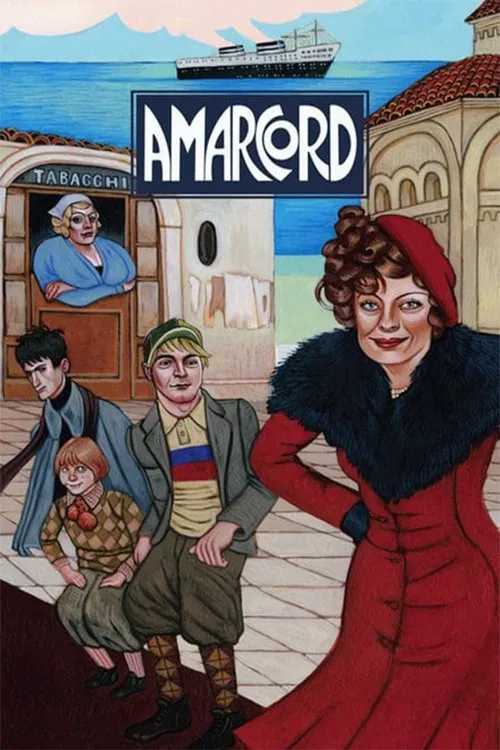
Amarcord

Federico Fellini, 1973

A teenage boy named Titta lives through a year in a small Italian seaside town under Mussolini. His family, his teachers and a glamorous local woman fill his days with comic chaos. Worth watching for how Fellini turns memory into a parade of set pieces.

Amarcord (1973) poster

At a glance

Amarcord is a 1973 comedy and drama film directed by Federico Fellini. This breakdown covers 5 techniques (3 narrative, 1 cinematography and 1 sound), each with the scene where you can see it. If you like how it is made, Dune uses several of the same techniques.

Narrative

Autobiographical Distance

Drawing on the filmmaker's own life but keeping it at arm's length, often through a fictional stand-in. The result is precise and unsentimental, and it can question how memory flatters us.

How this film uses it

Fellini draws on his Rimini boyhood but never plays it as a plain memoir. The town is exaggerated, funny and lightly mocking, as memory tends to be.

Where to see it

The bonfire at the start of spring: the whole village gathers to burn an effigy, a ritual remembered as a comic spectacle.
Cinematography

Set as Total World

Building a set so complete, with its own weather, crowds, architecture and social rules, that it feels lived in. It reads as real until one deliberate slip shows that it was built.

How this film uses it

The village was built in the Roman film studios. Its streets and the sea beyond feel complete and also faintly theatrical, which matches the memory-like mood.

Where to see it

The village life: shops, streets and the sea all look both real and made up, like a remembered town.

Narrative

Seasonal Structure

Organizing a film by the seasons of a single year, so festivals, weather and other recurring community events mark time without one main plot.

How this film uses it

The film moves from spring poplar seeds and a bonfire to the autumn boat trip, a thick fog, a snowy winter and a death in the family. The seasons keep the episodes together.

Where to see it

The fog: dense fog settles over the town, and Titta's family goes through a winter that ends with his mother's death.

Narrative

Black Comedy as Political Weapon

Using absurd humor, farce and caricature to attack a political target. The jokes make the target look ridiculous and get past defenses that a serious argument would hit.

How this film uses it

The Fascists in town are shown as bullies and clowns. The jokes about them stay close to the cruelty they cause.

Where to see it

Aurelio's interrogation: Titta's father is questioned by the Fascists and forced to drink castor oil.

Sound

Composer Signature Score

Letting a particular composer's or musician's style define the film's sound. The music has a recognizable voice that shapes mood and character.

How this film uses it

Nino Rota's music, a regular partner of Fellini's, gives the village a warm, nostalgic tone. The tunes feel like something half-remembered from childhood.

Where to see it

The Rex passes: villagers take boats out to watch the huge ocean liner go by, and the small boats capsize in its wake.

Questions

Amarcord: quick answers

What filmmaking techniques does Amarcord use?
CineCode breaks down 5 techniques in Amarcord (1973): Autobiographical Distance, Set as Total World, Seasonal Structure, Black Comedy as Political Weapon and Composer Signature Score.
Who directed Amarcord?
Federico Fellini directed Amarcord, released in 1973. CineCode also covers I Vitelloni (1953), La Strada (1954), Nights of Cabiria (1957), La Dolce Vita (1960), 8½ (1963), Juliet of the Spirits (1965).
What films are similar to Amarcord?
Films that share techniques with Amarcord include Dune (1984), Hook (1991), Snowpiercer (2013), The Pianist (2002).