Crime · Drama

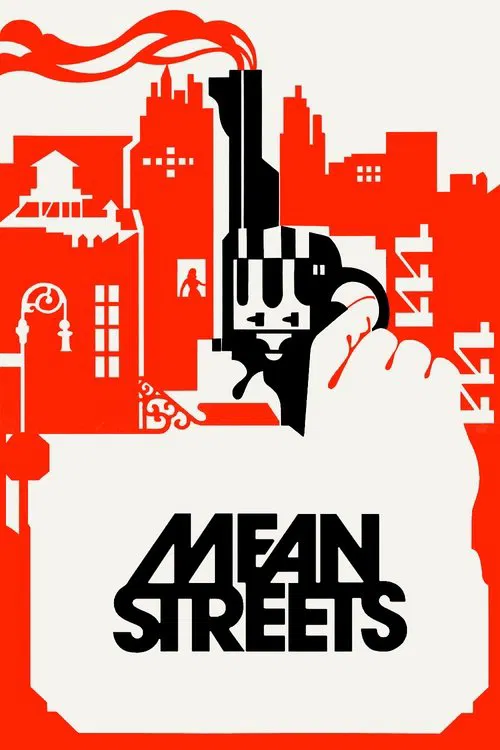
Mean Streets

Martin Scorsese, 1973

Charlie works for his mobster uncle in Little Italy while trying to look after his reckless friend Johnny Boy, a gambler who owes money to loan sharks. Charlie is also caught between the church and the street. It is Scorsese's breakthrough, made fast and cheap with songs as the engine.

Mean Streets (1973) poster

At a glance

Mean Streets is a 1973 crime and drama film directed by Martin Scorsese. This breakdown covers 5 techniques (2 sound, 2 cinematography and 1 narrative), each with the scene where you can see it. If you like how it is made, Inherent Vice uses several of the same techniques.

Sound

Pop Music Needle Drop

Playing an existing popular song at a precise moment in the film. The song's lyrics, era and associations add irony, period feel or emotion that an original score could not.

How this film uses it

The film opens on the Ronettes' Be My Baby, and critic Owen Gleiberman called it arguably the greatest use of a pop song in Hollywood history. Later, Scorsese cut Jumpin' Jack Flash to Johnny Boy's entrance into a red-lit bar. Songs speak for the characters here, because the old-style score would not feel like these guys.

Where to see it

Johnny Boy's entrance at the bar: slow motion, red light, and the Rolling Stones, with the camera sliding toward Charlie.

Cinematography

Subjective Camera

Placing the camera where a character's eyes are, or shooting the scene the way that character experiences it. You see and feel things from inside their head.

How this film uses it

For a drunken walk through a bar, the camera was attached to Harvey Keitel on a rig. It moves as he sways, so the room tilts with him. You do not watch Charlie get drunk so much as feel it from his body.

Where to see it

Charlie's drunken walk: the camera rig on Keitel follows him through the crowd to Rubber Biscuit.

Cinematography

Working-Class Geography

Using specific working-class parts of a city, like its bars, docks and construction sites, to define the characters. The places show who they are expected to be and what leaving would cost.

How this film uses it

The film stays inside Little Italy's bars, streets and church. Church scenes were shot at St. Patrick's Old Cathedral in the neighborhood. These places decide who Charlie is allowed to be and what leaving would cost him.

Where to see it

Charlie in church: torn between his Catholic faith and his work for his uncle, he looks for a way to make up for his sins.

Narrative

Actor Improvisation

Letting actors invent dialogue and action inside a scene's outline. The exchanges feel unrehearsed and a little dangerous.

How this film uses it

Keitel and De Niro improvised the fight with the trash cans and the talk behind the bar. The scenes have the stop-start rhythm of real arguments. You believe these two have known each other for years.

Where to see it

The trash can fight: Charlie and Johnny Boy's friends scuffle in a messy, loose scene that the actors made up.

Sound

Voiceover Narration Device

Using a narrator's voice to guide the story, either as flat documentary report or as a voice that gets interrupted. The narration shapes how much you trust the telling.

How this film uses it

Scorsese himself narrates throughout, a device he took from Fellini's I Vitelloni. His voice gives Charlie's guilt a spoken weight without showing the director. It makes the film feel like a personal memory of a neighborhood.

Where to see it

The opening: Scorsese's voice tells you that you do not make up for your sins in church, and the film goes into Charlie's story.

Questions

Mean Streets: quick answers

What filmmaking techniques does Mean Streets use?
CineCode breaks down 5 techniques in Mean Streets (1973): Pop Music Needle Drop, Subjective Camera, Working-Class Geography, Actor Improvisation and Voiceover Narration Device.
Who directed Mean Streets?
Martin Scorsese directed Mean Streets, released in 1973. CineCode also covers Alice Doesn't Live Here Anymore (1974), Taxi Driver (1976), New York, New York (1977), Raging Bull (1980), The King of Comedy (1982), After Hours (1985).
What films are similar to Mean Streets?
Films that share techniques with Mean Streets include Inherent Vice (2014), Fear and Loathing in Las Vegas (1998), Happy Feet (2006), Billy Elliot (2000).