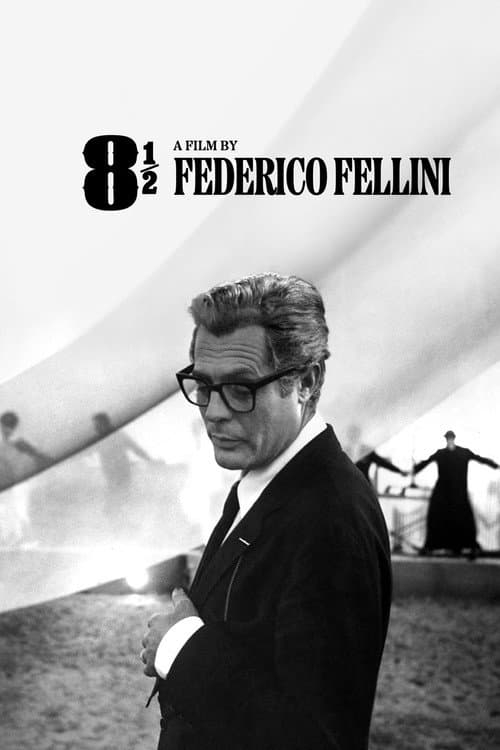
8½
Federico Fellini · 1963
A film director paralyzed by creative block retreats to a spa, where his memories, fantasies, and present reality blur into each other. Fellini's most personal film uses cinema's tools to examine what it means to be an artist who has run out of things to say.
Techniques Used
4 techniques identified in this film
Dream Logic Structure
NarrativeSequences operating by the associative, symbol-laden logic of dreams — images connected by emotional resonance rather than causal sequence, the narrative moving freely between memory, fantasy, and present.
How this film uses it
Fellini moves between Guido's present reality, his childhood memories, his fantasies about women, and his recurring harem dream without warning or transitional devices. The film's structure enacts the director's mental state: a consciousness in which all times and desires are simultaneously present, unable to be organized into a film.
Unreliable Reality
PsychologyA film whose world may be subjective or constructed — where the boundary between what is happening and what the protagonist is imagining cannot be reliably determined.
How this film uses it
At any moment, what we see may be Guido's memory, his fantasy, his anxiety, or the literal present. Fellini provides no reliable transitions between these states. The effect is a film whose subject — a man who cannot separate his imaginative life from reality — is performed formally as well as depicted narratively.
Circular Structure
NarrativeA narrative that ends by returning to its beginning — a repeated image or gesture — so that the ending comments on the opening with the full weight of everything between.
How this film uses it
The film opens with Guido's suffocation dream and ends with the director-within-the-film ordering all his characters to dance together. The circle is not a repetition but a resolution: what began as paralysis ends as acceptance — the film Guido couldn't make becomes the film Fellini made about not being able to make it.
Psychological Doubling
PsychologyTwo characters who mirror each other as shadow versions — one representing what the other secretly is, fears, or desires — their relationship defining the film's psychological core.
How this film uses it
Guido's wife Luisa and his mistress Carla are not simply romantic rivals — they are aspects of his divided self. Luisa represents what he respects and cannot live up to; Carla represents what he desires and cannot respect. Neither is complete; together they constitute the impossible ideal woman Guido keeps trying to make films about.
You Might Also Like
Films that share at least one technique with 8½

An elderly professor drives to receive an honorary degree and, on the journey, confronts the emotional failures of his life through dreams, memories, and encounters with strangers who mirror his younger self. Bergman's most accessible film, and his most direct statement about what constitutes a life well-lived.
Wild Strawberries
Ingmar Bergman · 1957

A U.S. Marshal investigates the disappearance of a patient from a remote island psychiatric facility — and begins to doubt the reality of everything around him. Scorsese's most formally extravagant film uses genre conventions as a trap.
Shutter Island
Martin Scorsese · 2010
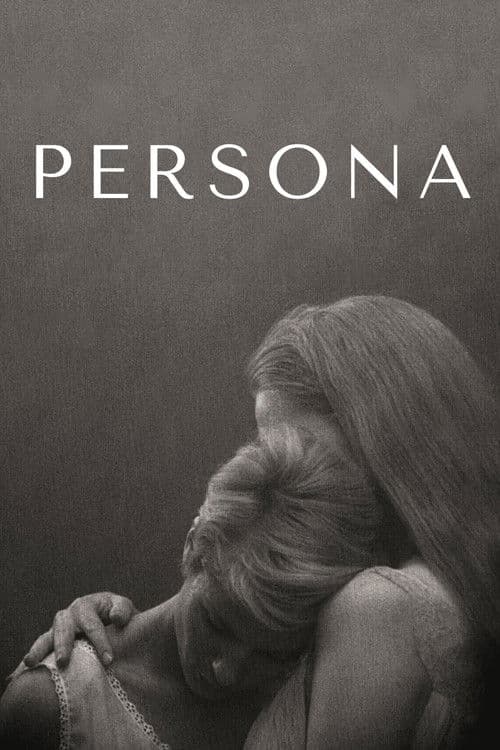
A famous actress abruptly stops speaking and is assigned to the care of a nurse named Alma at a remote seaside cottage, where the boundary between their identities begins to dissolve. Bergman's most formally radical film makes the cinema screen itself the site of psychological collapse.
Persona
Ingmar Bergman · 1966