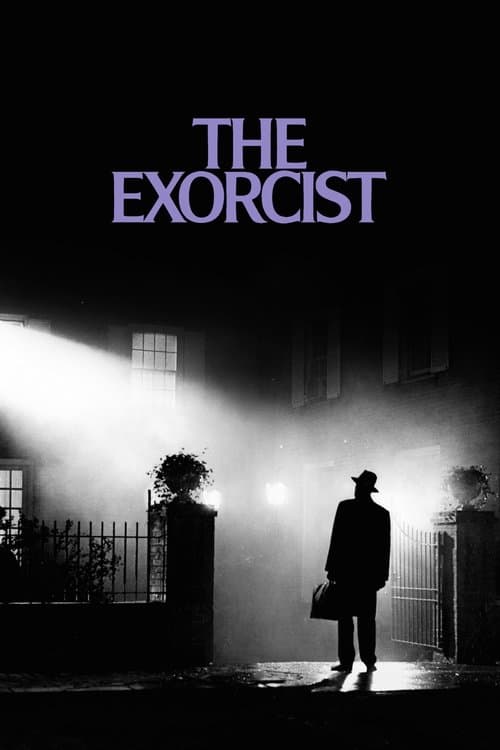
The Exorcist
William Friedkin · 1973
A twelve-year-old girl in Georgetown becomes possessed by a malevolent entity, and her desperate mother turns to a priest wrestling with his own faith crisis to perform an exorcism. William Friedkin's film remains the definitive statement on the horror of the body turned against the self.
Techniques Used
4 techniques identified in this film
Psychoanalytic Horror
PsychologyA horror approach that locates terror in the violation of psychological boundaries — the self invaded, the family structure corrupted, the unconscious made literal.
How this film uses it
The demon possessing Regan externalizes a Freudian nightmare — the child's body expressing adult sexuality and violence, the mother helpless, the father absent — making the horror a portrait of domestic structure under assault.
Subliminal Editing
EditingThe insertion of single frames or brief images into a sequence at a speed below conscious perception, creating unease without legible cause.
How this film uses it
Friedkin inserts brief flashes of a demonic face throughout the film — visible on freeze-frame but registered subliminally in motion — creating the pervasive sense of an evil presence just below the surface of normal perception.
Production Design as Psychological Space
CinematographyThe use of production design — architecture, objects, color — to externalize a character's psychology without resorting to dialogue.
How this film uses it
Regan's bedroom transforms across the film from a child's warm, cluttered space into an arctic, violated environment — the production design charting the possession's progress as a physical deterioration of domestic safety.
Dutch Angle
CinematographyA camera tilt that creates a canted, off-axis horizon line, suggesting psychological instability or moral wrongness in the world depicted.
How this film uses it
Friedkin uses canted angles sparingly and precisely — reserving them for moments when the supernatural has definitively violated the rational world, making the Dutch angle a marker of points of no return.
You Might Also Like
Films that share at least one technique with The Exorcist

An insomniac office worker and a charismatic soap salesman form an underground fight club that evolves into something far more dangerous. A critique of consumer masculinity that implicates the viewer in its protagonist's pathology.
Fight Club
David Fincher · 1999
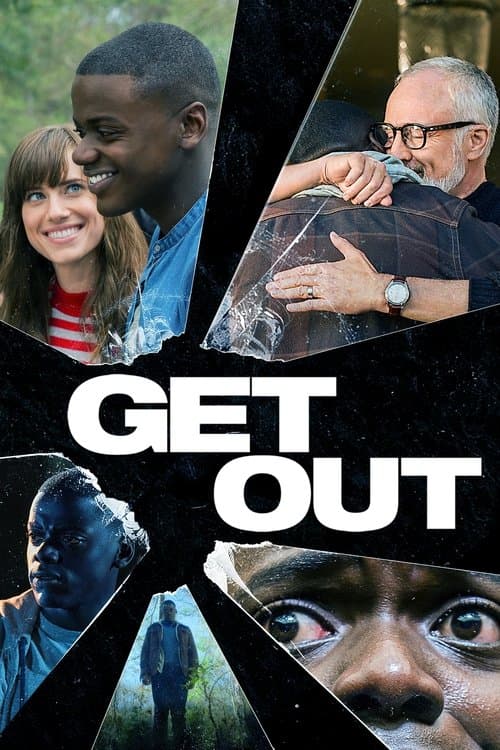
A Black man visiting his white girlfriend's family for the weekend uncovers a disturbing secret beneath their liberal veneer. A precision-engineered social horror film that uses genre mechanics to externalize systemic racism.
Get Out
Jordan Peele · 2017
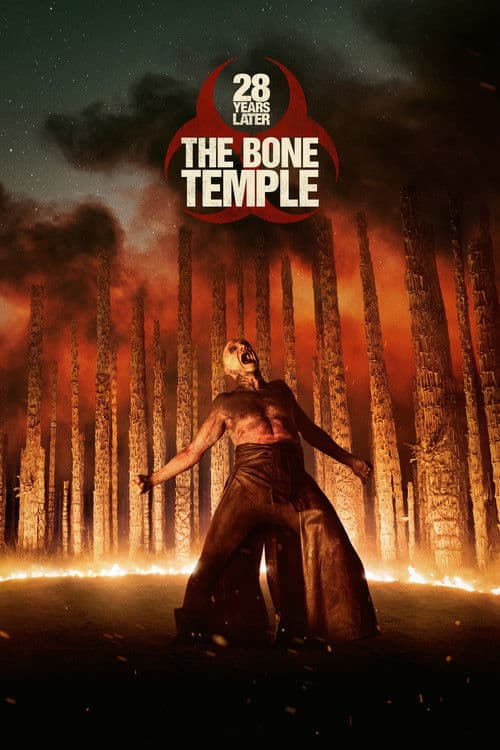
In a Britain ravaged by the Rage virus, a young survivor is captured by a roving Satanic cult while a scientist makes an unprecedented connection with an infected host. Written by Alex Garland, directed by Nia DaCosta — a sequel that deliberately dismantles the visual grammar of its predecessor.
28 Years Later: The Bone Temple
Nia DaCosta · 2026