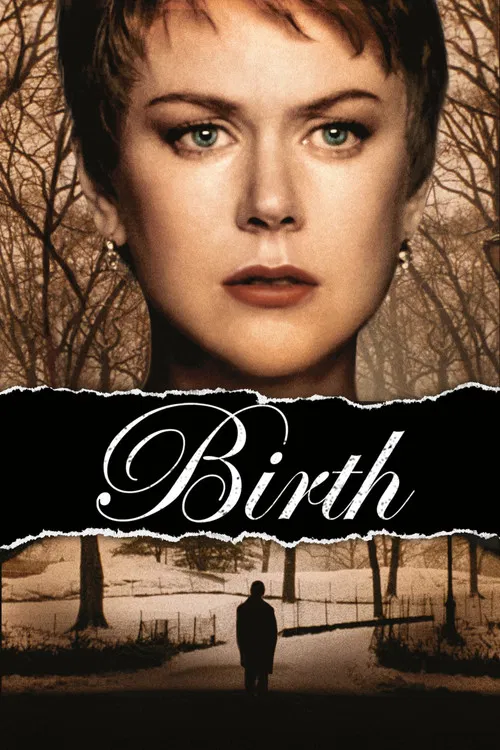
Ten years after her husband Sean died jogging, Anna is about to remarry when a 10-year-old boy tells her he is Sean reborn. She slowly starts to believe him. The film never plays it as a ghost story, and what you can watch for is how a still, quiet camera makes you feel her doubt and her longing.
Birth is a 2004 drama, mystery and romance film directed by Jonathan Glazer. This breakdown covers 4 techniques (1 narrative, 1 cinematography and 2 psychology), each with the scene where you can see it. If you like how it is made, Pete's Dragon uses several of the same techniques.
Shaping the story with fairy tale elements such as quests, enchanted figures and moral tests, or letting them break into a realistic world.
How this film uses it
Glazer said he pictured the story as a fairy tale from early on, and it shows. A child arrives with a message from the dead, the grown-up world tries to shut him up, and a woman has to decide what she believes. The ordinary New York settings are treated like a storybook world with its own rules.
Where to see it
Party at Anna's mother's: the boy sneaks into the apartment and says he is Sean. A letter the next day warns Anna not to marry Joseph, and she realizes the boy truly believes it.
Holding a close-up on an actor's face long enough to catch tiny changes in expression. You read what the character is thinking from details a wider shot would miss.
How this film uses it
The camera stays on Nicole Kidman's face for a long time without cutting away. You read her doubt, hope and fear from tiny changes in her eyes and mouth, because there is almost no dialogue to help. It makes you feel what she feels before she says anything.
Where to see it
Opera scene: Anna sits in the audience and the camera holds on a long, unbroken close-up of her face while the music plays.
Driving drama from what one person hides from or fails to do for another. Loyalty goes unrewarded and silence works like betrayal.
How this film uses it
The boy seems to know details only Sean could know, so you start to wonder if he is for real. Late on, the film shows how: Clara, who had a secret affair with Sean, buried a package of Anna's love letters, and the boy dug it up and read them. A hidden betrayal explains what looked like magic.
Where to see it
Clara and the buried gift: Clara reveals she and Sean were lovers. The boy's backpack is full of Anna's love letters to Sean, which he had secretly dug up the night of the party.
Following a character who carries a past love or lost chance and has to release it. Acceptance, not victory, becomes the emotional resolution.
How this film uses it
Anna cannot let go of a husband who died ten years ago, and the boy gives her a way to hold on. The ending does not hand her a victory, only a painful acceptance. After the boy tells her he is not Sean, you feel how heavy her grief still is.
Where to see it
Ending: Anna apologizes to Joseph and they marry on a beach. After the ceremony she wades into the ocean in anguish, and Joseph whispers in her ear.
Questions
Birth: quick answers
What filmmaking techniques does Birth use?
CineCode breaks down 4 techniques in Birth (2004): Fairy Tale Structure, Deliberate Close-Up Performance, Betrayal and Withheld Truth and Regret and Letting Go.
Who directed Birth?
Jonathan Glazer directed Birth, released in 2004. CineCode also covers Sexy Beast (2001), Under the Skin (2013), The Zone of Interest (2023).
What films are similar to Birth?
Films that share techniques with Birth include Pete's Dragon (2016), Splendor in the Grass (1961), The Mule (2018), 28 Years Later: The Bone Temple (2026).