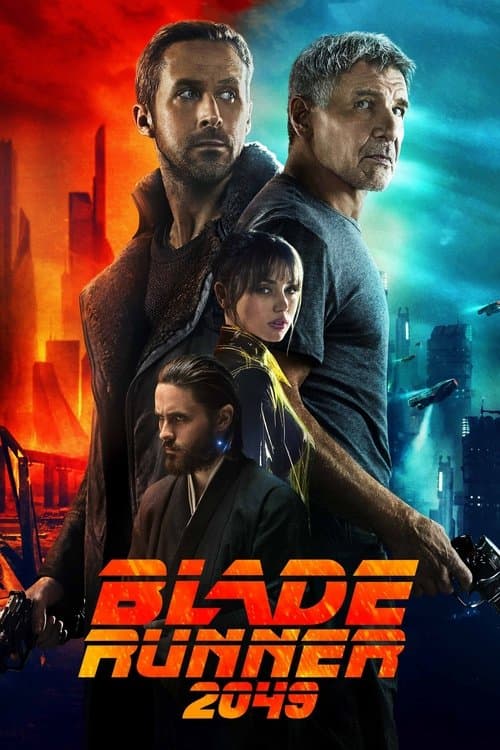
Blade Runner 2049
Denis Villeneuve · 2017
LAPD blade runner K discovers a buried secret that could destabilize what remains of society, leading him toward a replicant who disappeared decades ago. Denis Villeneuve and Roger Deakins construct a sequel that earns its predecessor's legacy by asking different questions with the same deliberateness.
Techniques Used
5 techniques identified in this film
Color Palette as Worldbuilding
CinematographyAssigning distinct color palettes to different narrative spaces or states — so that the visual world communicates geography, psychology, and meaning without dialogue or exposition.
How this film uses it
Roger Deakins codes each zone of 2049 in a distinct palette: the orange desolation of the protein farms, the cold blue of LAPD headquarters, the pink neon ruin of Las Vegas, the white void of Wallace's compound. The system is the film's geography — you always know where you are and what that place means.
Production Design as Psychological Space
CinematographyUsing a film's sets and design to externalize character psychology — so that the space a person inhabits tells the audience what the dialogue cannot.
How this film uses it
K's apartment is grey and minimal, reflecting a being whose interiority is officially denied. Wallace's headquarters — white, cathedral-scaled, filled with precisely controlled water — externalizes a god-complex built on absolute aesthetic mastery. The design maps each character's psychology before anyone speaks.
Machine Learning as Arc
NarrativeA narrative organized around an artificial being's investigation of its own consciousness or identity — using the question of what makes experience real as the story's structural and emotional engine.
How this film uses it
K's investigation of whether his implanted memory is genuine — whether he might be the replicant child of Deckard and Rachel — is the film's emotional engine. The arc resolves not in confirmation but in K performing decency despite knowing he is not special, the film arguing that chosen virtue outweighs ontological privilege.
Slow Build Runtime
NarrativeA film whose extended runtime is used not to tell more story but to alter the audience's temporal relationship with the material — so that watching becomes an experience of duration rather than consumption of narrative.
How this film uses it
At 164 minutes, Blade Runner 2049 insists on a temporal experience commensurate with its subject: a world where time has stretched into post-ecological near-future. The pacing refuses conventional thriller momentum, building its questions slowly enough that the audience inhabits them.
Hard Science Fiction Aesthetics
CinematographyA visual and narrative commitment to scientific plausibility — where the speculative elements are designed with internal consistency and research rigor rather than spectacle convenience.
How this film uses it
The 2049 world extrapolates from the original's 2019 with ecological specificity: the sea walls, the protein farms, the failed ecosystems are consequences of a plausible climate trajectory. The science fiction does not offer escape from the present; it performs a forensic analysis of where the present leads.
You Might Also Like
Films that share at least one technique with Blade Runner 2049
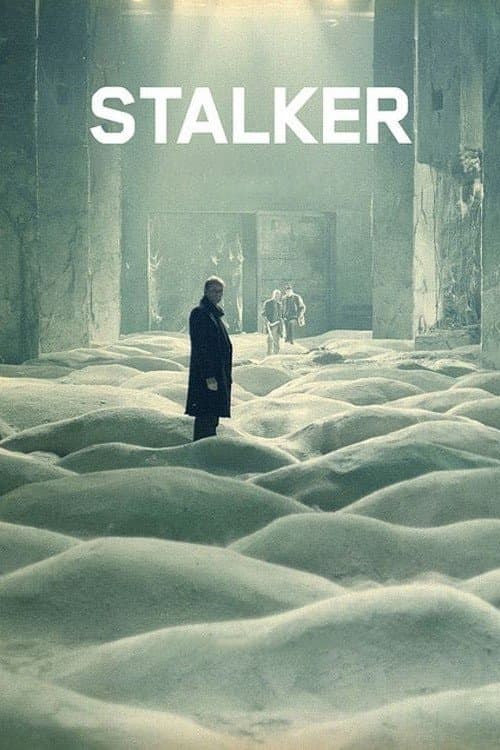
A guide called the Stalker leads a Writer and a Professor through the Zone — a forbidden, seemingly supernatural landscape containing a Room that grants a person's deepest wish. One of cinema's most demanding and rewarding films: a philosophical journey that refuses every destination it promises.
Stalker
Andrei Tarkovsky · 1979

A lonely writer in near-future Los Angeles falls in love with an AI operating system. A tender, melancholy film about connection, loneliness, and what it means to love something that exists differently than you do.
Her
Spike Jonze · 2013
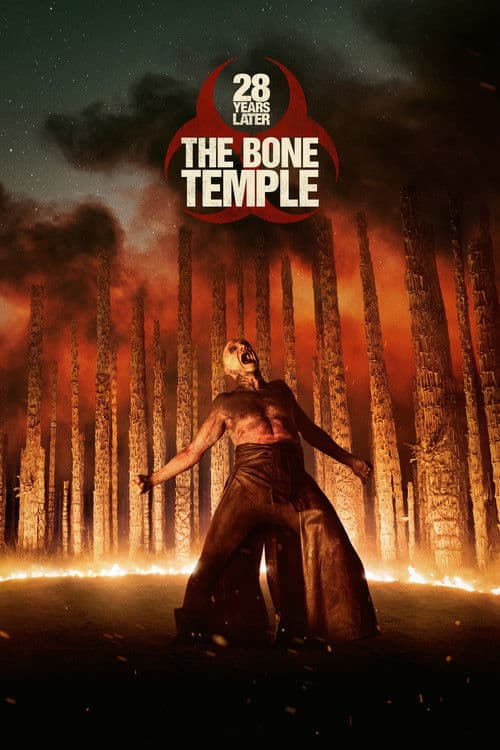
In a Britain ravaged by the Rage virus, a young survivor is captured by a roving Satanic cult while a scientist makes an unprecedented connection with an infected host. Written by Alex Garland, directed by Nia DaCosta — a sequel that deliberately dismantles the visual grammar of its predecessor.
28 Years Later: The Bone Temple
Nia DaCosta · 2026