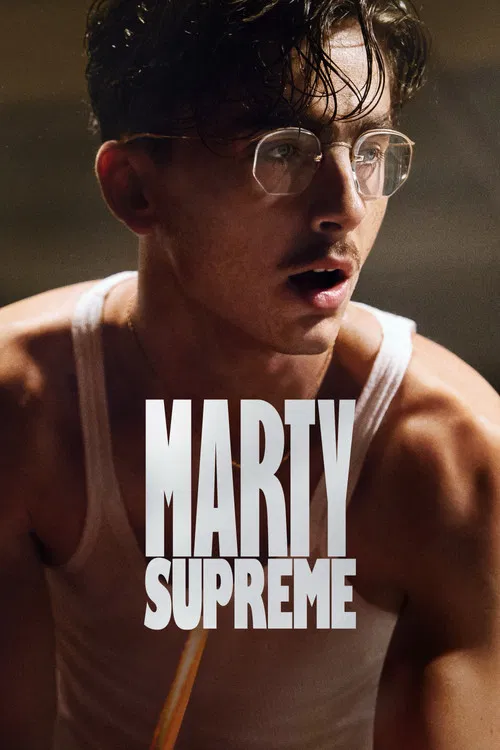
In 1952 New York, Marty Mauser sells shoes and dreams of becoming the best table tennis player in the world. He lies and hustles his way from London to Tokyo to get there. Timothée Chalamet plays him at full speed. Watch how Josh Safdie pairs a 1950s story with 1980s pop and keeps the camera tight on faces.
Marty Supreme is a 2025 sport, drama and comedy film directed by Josh Safdie. This breakdown covers 4 techniques (1 sound, 1 cinematography and 2 narrative), each with the scene where you can see it. If you like how it is made, The Master uses several of the same techniques.
Playing music from a different era, such as hip-hop, rock or pop, over a story set in the past. The clash comments on how those past events connect to the present.
How this film uses it
The story is set in the early 1950s. The soundtrack mixes 1950s songs with 1980s synth-pop by Alphaville, Tears for Fears and New Order. Composer Daniel Lopatin also gave his score a deliberately 80s sound. The clash makes Marty feel like a man living ahead of his own time.
Where to see it
The opening credits. Sperm race toward an egg to Alphaville's "Forever Young", and the image turns into a table tennis match.
Holding a close-up on an actor's face long enough to catch tiny changes in expression. You read what the character is thinking from details a wider shot would miss.
How this film uses it
Cinematographer Darius Khondji shot mostly with long anamorphic lenses, which let the camera stand far back and still fill the frame with a face. He called the close-ups "obsessively tight". You are pressed up against Marty as he talks his way in and out of trouble, so you feel his panic and his charm at the same distance.
Where to see it
Marty's matches against Koto Endo. Khondji lit the tournament scenes with mushroom lights hanging over the tables, so light falls on the players' faces and you can read every reaction between points.
Telling the story as a loose string of separate adventures, often following a low-status hero through different levels of society. With no single plot, the episodes add up to a portrait of a world.
How this film uses it
Marty bounces from a shoe store to the Ritz in London, then on tour with the Harlem Globetrotters, then into bowling alley hustles back home. Each stop drops him into a different corner of 1950s society. The episodes pile up into a portrait of a hustler's world.
Where to see it
Marty's tour with the Harlem Globetrotters. After losing the British Open final, he travels with the team as a halftime novelty act.
Building the whole plot on one character's fixation with a person, goal or rival. Every scene ties back to it, and the obsession keeps feeding itself while it destroys them.
How this film uses it
Every choice Marty makes comes back to one goal: being the best in the world. He steals $700 from his uncle's shop to get to London and wrecks relationships along the way. That is, the obsession drags everyone near him into trouble.
Where to see it
The Tokyo exhibition. Marty loses to Endo as planned, then declares the match a sham and wins a real rematch.
Questions
Marty Supreme: quick answers
What filmmaking techniques does Marty Supreme use?
CineCode breaks down 4 techniques in Marty Supreme (2025): Anachronistic Soundtrack, Deliberate Close-Up Performance, Picaresque Structure and Obsession as Structural Engine.
Who directed Marty Supreme?
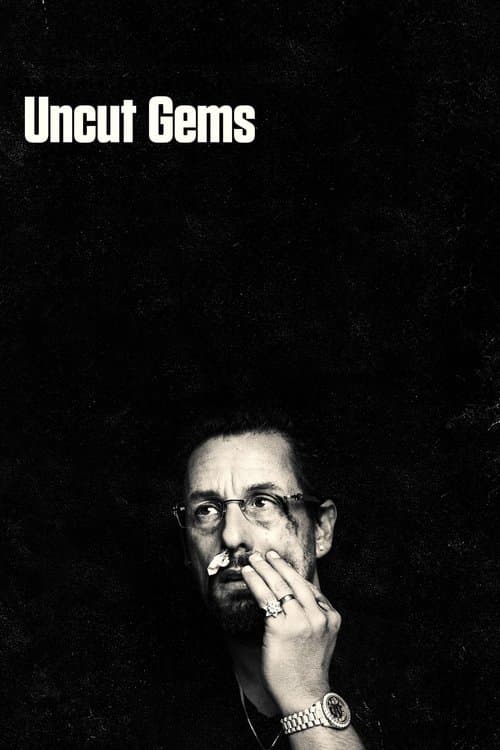
Josh Safdie directed Marty Supreme, released in 2025. CineCode also covers Heaven Knows What (2015), Good Time (2017), Uncut Gems (2019).
What films are similar to Marty Supreme?
Films that share techniques with Marty Supreme include The Master (2012), Good Time (2017), Queer (2024), 28 Years Later: The Bone Temple (2026).