Thriller · Crime

Panic Room

David Fincher, 2002

A newly divorced mother and her diabetic daughter move into a New York brownstone with a steel-reinforced safe room. On the first night, 3 burglars break in after bonds locked in a safe inside that room. Fincher planned his camera moves in a computer first, and it shows.

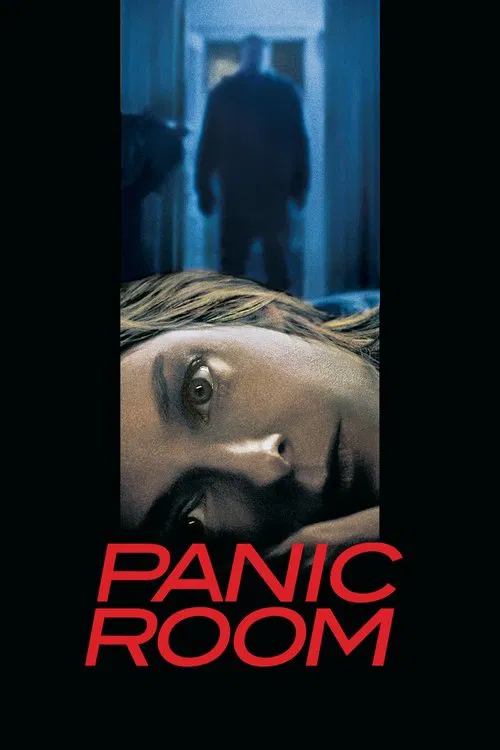
Panic Room (2002) poster

At a glance

Panic Room is a 2002 thriller and crime film directed by David Fincher. This breakdown covers 5 techniques (3 cinematography, 1 narrative and 1 psychology), each with the scene where you can see it. If you like how it is made, Rope uses several of the same techniques.

Cinematography

Single-Location Cinematography

Shooting almost the whole film in 1 confined place. Set design and camera movement keep it visually interesting, and the space itself takes on meaning as the story goes on.

How this film uses it

Nearly the whole film takes place inside 1 house, built on a soundstage with 3 versions of the panic room so the crew could film from many angles. You always know where the stairs, hall and panic room are, so the danger feels close.

Where to see it

The first night. Meg and Sarah settle into the brownstone, and 3 burglars break in.

Cinematography

Camera as Unseen Presence

Giving the camera its own point of view, as if an invisible being is watching the characters. It drifts, pauses and chooses where to look, and you feel that presence in the room.

How this film uses it

Fincher said there was no camera operator and the camera could go everywhere. It floats up stairs and through rooms as if something is watching the house. A 3D computer model of the house let him plan these moves in advance.

Where to see it

The opening shot. The camera passes through New York landmarks with the credits hovering in front of them, then moves seamlessly into the introduction of Meg and Sarah, in a shot that took 9 days to film and months to finish in post-production.

Cinematography

Siege Cinema

Staging a conflict as a long fight over a physical place, such as an assault on a fortress. Walls, streets, darkness and weather all become part of the drama.

How this film uses it

The house becomes a fortress under attack. The burglars try 1 trick after another to force Meg and Sarah out, and the fight escalates into deaths and a hostage situation. Walls, doors and the layout of the rooms become the weapons.

Where to see it

The standoff at the panic room. The burglars try to get Meg and Sarah to open the door.

Narrative

Ticking Clock Structure

Building the story around a clear deadline the hero must beat. The time pressure and the obstacles grow with each scene until the climax.

How this film uses it

Sarah is diabetic, so waiting out the night is not safe. Her emergency medicine is outside the room, which forces Meg to leave safety. The longer the siege goes on, the less time Sarah has.

Where to see it

Sarah's medical emergency. Sarah's diabetes puts her in danger, and Meg has to leave the panic room to reach her medicine.

Psychology

Safe Space Turned Trap

Making a place built for protection become the thing that confines the hero. The refuge shrinks into a cage, and safety and imprisonment start to feel the same.

How this film uses it

The panic room keeps Meg and Sarah alive, but it also holds them in, and the bonds are locked in a safe inside it. The intruders want the room as much as the people. You feel the refuge shrinking into a cage.

Where to see it

The lockdown. Meg and Sarah shut themselves in the panic room while the burglars search the house for the bonds.

Questions

Panic Room: quick answers

What filmmaking techniques does Panic Room use?
CineCode breaks down 5 techniques in Panic Room (2002): Single-Location Cinematography, Camera as Unseen Presence, Siege Cinema, Ticking Clock Structure and Safe Space Turned Trap.
Who directed Panic Room?
David Fincher directed Panic Room, released in 2002. CineCode also covers Alien³ (1992), Se7en (1995), The Game (1997), Fight Club (1999), Zodiac (2007), The Curious Case of Benjamin Button (2008).
What films are similar to Panic Room?
Films that share techniques with Panic Room include Rope (1948), Die Hard (1988), The Abyss (1989), K-19: The Widowmaker (2002).