Horror · Drama · Mystery

Rosemary's Baby

Roman Polanski, 1968

A young couple moves into an old Manhattan apartment building, and their elderly neighbors take a keen interest in them. When Rosemary gets pregnant, the neighbors and her husband start controlling every part of her life. Watch for how much Polanski keeps off screen, from a neighbor's phone call to the baby itself. I feel like the horror lives in what you imagine.

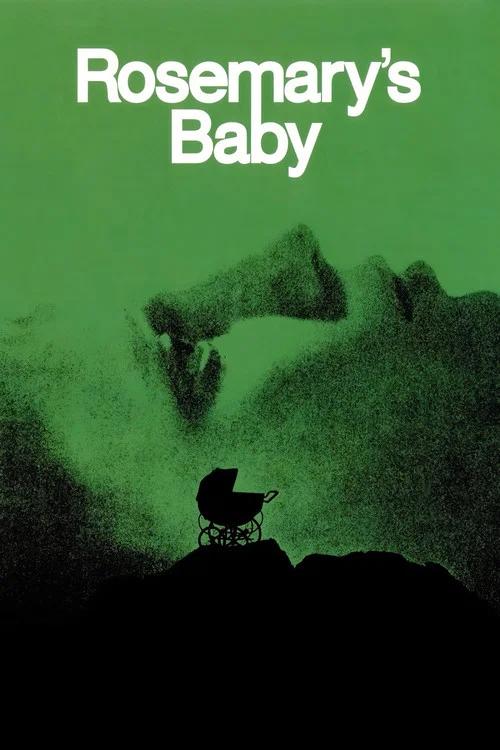
Rosemary's Baby (1968) poster

At a glance

Rosemary's Baby is a 1968 horror, drama and mystery film directed by Roman Polanski. This breakdown covers 5 techniques (1 cinematography, 2 narrative, 1 psychology and 1 sound), each with the scene where you can see it. If you like how it is made, Her uses several of the same techniques.

Cinematography

Off-Screen Space

Keeping a character or threat outside the frame on purpose. You sense it through sounds and other characters' reactions, and your imagination fills in the rest.

How this film uses it

Polanski keeps hiding things just out of view. Cinematographer William Fraker first framed Minnie's phone call so you could see her. Polanski had him move the camera until the doorframe blocked her. The film does the same with the baby, which you never see.

Where to see it

Minnie's phone call. Rosemary's neighbor makes a call from the bedroom, and the camera stays in the next room. You only see a sliver of her back through the doorway and strain to hear what she says.

Narrative

Single POV Restriction

Limiting the film to what one character can see and know. The camera never goes where they couldn't be, so you share their blind spots and their vulnerability.

How this film uses it

The film stays with Rosemary in almost every scene. You only learn what she learns, from the same half-heard comments and odd gifts. When she finally asks for help, you have no proof to give anyone either.

Where to see it

Rosemary's visit to Dr. Hill. She tells her old doctor everything she has worked out. He listens, then calls Dr. Sapirstein, who arrives with her husband to take her home.

Psychology

Epistemic Collapse

Taking away, piece by piece, any way of telling truth from delusion. A character's whole understanding of events falls apart, and you end up just as lost.

How this film uses it

Every clue Rosemary finds can be read 2 ways. The neighbors could be a coven, or she could be a frightened, sick pregnant woman. The film keeps both readings open for a long time, so you start to doubt her and yourself.

Where to see it

The Scrabble scene. After her friend Hutch's warning that "the name is an anagram," Rosemary shuffles Scrabble tiles and works out that Roman Castevet spells Steven Marcato, a reputed Satanist.

Narrative

Dream Logic Structure

Arranging scenes the way a dream moves, where one image leads to the next by feeling or association. Events don't follow normal cause and effect.

How this film uses it

After eating the neighbors' chocolate mousse, Rosemary drifts into a dream that jumps from a yacht at sea to a room full of strangers watching her. The images slide into each other with no clear order. You feel her drugged confusion, and you can't tell what is really happening to her body.

Where to see it

The conception night. Rosemary passes out and has a vision of a demonic figure raping her while others watch. She wakes up covered in scratches.

Sound

Diegetic Sound Design

Using sounds the characters themselves can hear, like footsteps, radios or traffic, to build tension or show how someone feels. The sound does more than make the scene realistic.

How this film uses it

A neighbor in the building keeps practicing Für Elise on the piano. You hear it through the walls, a little better each time. It quietly tells you months are passing while Rosemary is stuck inside the apartment.

Where to see it

Rosemary at home during her pregnancy. She sits in the apartment, pale and thin, while the same piano piece drifts in from somewhere in the building.

Questions

Rosemary's Baby: quick answers

What filmmaking techniques does Rosemary's Baby use?
CineCode breaks down 5 techniques in Rosemary's Baby (1968): Off-Screen Space, Single POV Restriction, Epistemic Collapse, Dream Logic Structure and Diegetic Sound Design.
Who directed Rosemary's Baby?
Roman Polanski directed Rosemary's Baby, released in 1968. CineCode also covers Repulsion (1965), The Fearless Vampire Killers (1967), Chinatown (1974), The Tenant (1976), Frantic (1988), Bitter Moon (1992).
What films are similar to Rosemary's Baby?
Films that share techniques with Rosemary's Baby include Her (2013), Synecdoche, New York (2008), Being John Malkovich (1999), The Conversation (1974).