Drama · Fantasy · Thriller

The Lovely Bones

Peter Jackson, 2009

In 1973, 14-year-old Susie Salmon is murdered by her neighbor George Harvey and watches her family from a place between heaven and earth. Her father and sister close in on the killer as she struggles to let go. Worth watching as a filmmaker for how an afterlife is built from feelings.

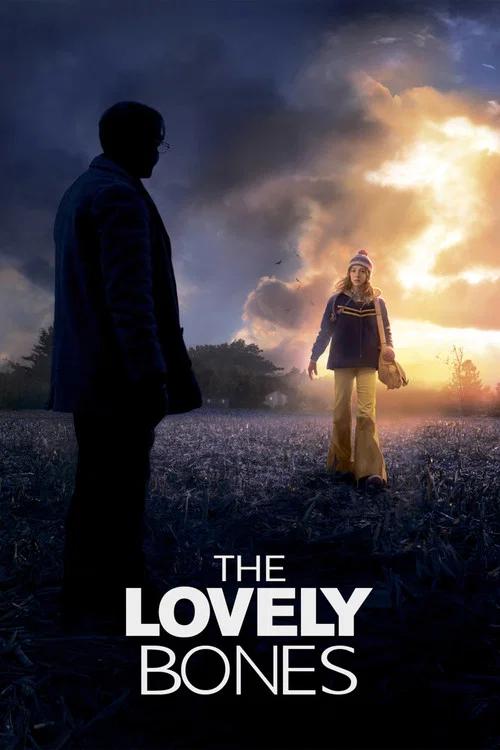
The Lovely Bones (2009) poster

At a glance

The Lovely Bones is a 2009 drama, fantasy and thriller film directed by Peter Jackson. This breakdown covers 5 techniques (3 narrative, 1 cinematography and 1 editing), each with the scene where you can see it. If you like how it is made, The Counselor uses several of the same techniques.

Narrative

Dead Narrator

Having the story told in voiceover by someone who is already dead or dying. Once you know, the whole film plays like a confession with no chance of rescue.

How this film uses it

Susie tells her own story after her death. You know from the start that she can't be saved, so her watching over her family feels like a long goodbye. Her voice gives the film a gentle sadness.

Where to see it

In-Between: After she realizes she was murdered, Susie finds herself in a place that is neither heaven nor earth, watching her family.

Narrative

Withheld Murder Scene

Never showing the act of violence itself. You only see the aftermath or hear characters describe it, and your imagination fills in what happened.

How this film uses it

The film never shows the killing. It fades out as Harvey grabs her, and the next thing you see is Susie rushing past her classmate Ruth. You fill in the rest yourself, which is harder to shake than a shown act.

Where to see it

The den: Harvey lures Susie into the underground hideout he built, and the scene fades as he grabs her.

Narrative

Dramatic Irony

Letting the audience know something a character doesn't. You watch them act without that knowledge, which creates suspense, dread or dark comedy.

How this film uses it

You know Harvey is the killer long before the family does. So when Lindsey breaks into his house, you are waiting for him to come back. The suspense comes from what you know that she doesn't.

Where to see it

Harvey's house: Lindsey sneaks in and finds a notebook with a sketch of the den. Harvey almost catches her.

Cinematography

Weather as Emotional Mirror

Letting rain, storms, sunshine or changing scenery reflect what characters feel, often breaking at the story's peak. The environment says what the characters cannot.

How this film uses it

Susie's In-Between changes with how she feels. According to the actress Saoirse Ronan, it is sunny with birds when she is happy, and when she is unhappy it rains or she is in the middle of an ocean. The place works like a mood ring you can see.

Where to see it

In-Between: Susie wanders landscapes that shift to match her feelings as she watches her family.

Editing

Parallel Crosscutting

Alternating between simultaneous lines of action in different places or worlds. The cuts build suspense or draw a comparison between the threads.

How this film uses it

The film moves back and forth between Susie's In-Between and the real world where her family searches. Her view is always a step apart from theirs. You feel the gap each time it cuts.

Where to see it

Jack's search: Susie watches her father look for her while she can do nothing to reach him.

Questions

The Lovely Bones: quick answers

What filmmaking techniques does The Lovely Bones use?
CineCode breaks down 5 techniques in The Lovely Bones (2009): Dead Narrator, Withheld Murder Scene, Dramatic Irony, Weather as Emotional Mirror and Parallel Crosscutting.
Who directed The Lovely Bones?
Peter Jackson directed The Lovely Bones, released in 2009. CineCode also covers Bad Taste (1987), Braindead (1992), Heavenly Creatures (1994), The Frighteners (1996), The Lord of the Rings: The Fellowship of the Ring (2001), The Lord of the Rings: The Two Towers (2002).
What films are similar to The Lovely Bones?
Films that share techniques with The Lovely Bones include The Counselor (2013), McCabe & Mrs. Miller (1971), United 93 (2006), Get Out (2017).