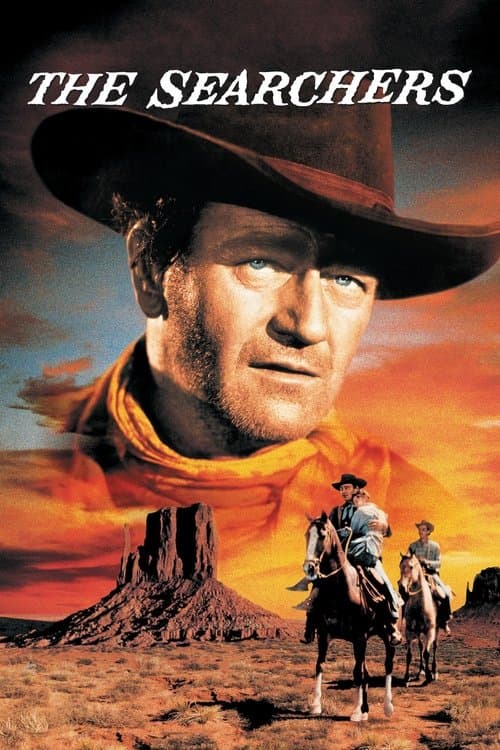
The Searchers
John Ford · 1956
Civil War veteran Ethan Edwards spends years obsessively tracking the Comanche tribe that abducted his niece Debbie — but as the search continues, it becomes unclear whether he intends to rescue her or kill her for living among them. John Ford's masterwork is the Western that questions the genre's soul.
Techniques Used
4 techniques identified in this film
Landscape as Sacred Geography
CinematographyThe treatment of a specific natural environment as a morally and emotionally charged space that defines the characters within it.
How this film uses it
Monument Valley is not scenery in Ford's film — it is a moral theater, its red mesas framing every act of violence and every failure of conscience, the landscape's beauty made complicit in what happens inside it.
Revisionist Genre Argument
NarrativeA film that inhabits a genre's conventions in order to systematically examine and dismantle them.
How this film uses it
Ford gives the Western's hero — the lone, righteous white man — a racial hatred so virulent it makes him the film's true monster, the genre's mythology turned inside out to reveal the violence beneath the manifest destiny myth.
Civil War as Moral Backdrop
NarrativeThe use of the Civil War's aftermath as a moral context that explains and complicates the violence a character carries into civilian life.
How this film uses it
Ethan's Confederate service and his refusal to surrender are the film's unexplained premise — the war having produced a man whose skills are useful and whose values are catastrophic, the Western as a story of what the war created.
Anamorphic Scope Composition
CinematographyThe use of anamorphic lenses to produce a wide cinematic frame that captures epic landscapes while retaining intimate human detail.
How this film uses it
Winton Hoch's VistaVision photography gives Monument Valley the visual scale of myth while keeping John Wayne's face — its weather and its hatred — in precise focus, the scope containing both the landscape and the man who cannot be reconciled to it.
You Might Also Like
Films that share at least one technique with The Searchers
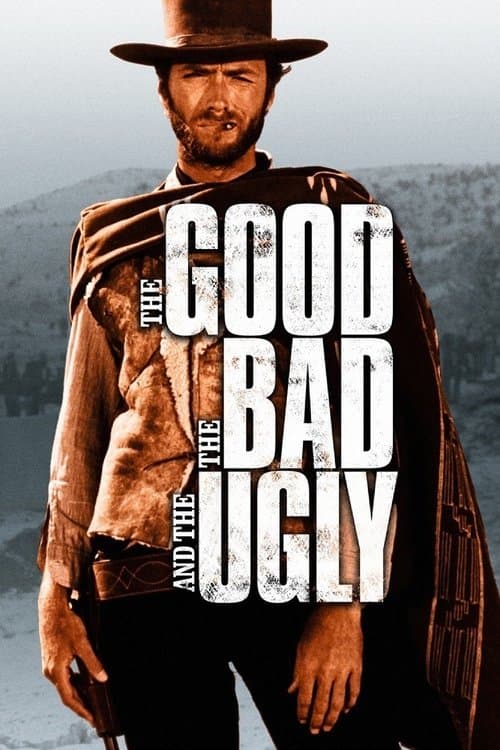
Three gunslingers — an amoral bounty hunter, a sadistic mercenary, and a Mexican bandit — compete to find a buried cache of Confederate gold during the American Civil War. A masterclass in tension engineering and the aestheticization of moral ambiguity.
The Good, the Bad and the Ugly
Sergio Leone · 1966
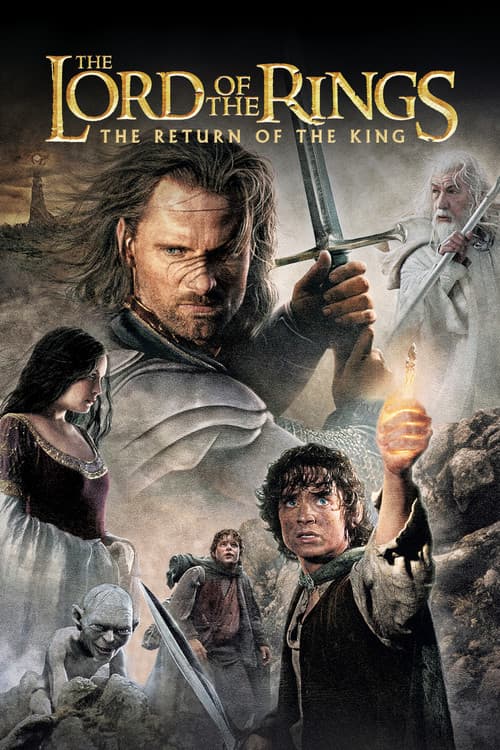
The Fellowship's quest reaches its climax as Frodo and Sam make their final push toward Mount Doom while Aragorn rallies the free peoples of Middle-earth in a desperate last stand. An epic of sacrifice and friendship that earns every one of its multiple emotional endings.
The Lord of the Rings: The Return of the King
Peter Jackson · 2003
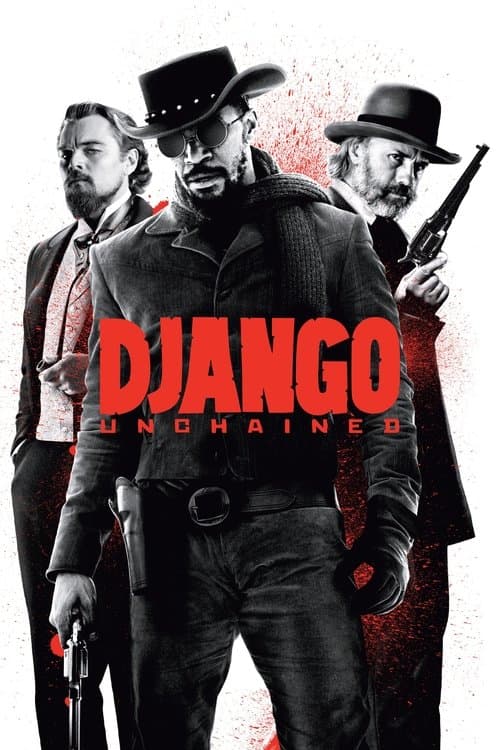
A freed slave teams with a German bounty hunter to rescue his wife from a brutal Mississippi plantation owner. A revisionist revenge Western that uses genre catharsis to make visceral what the polite historical narrative has always made abstract.
Django Unchained
Quentin Tarantino · 2012