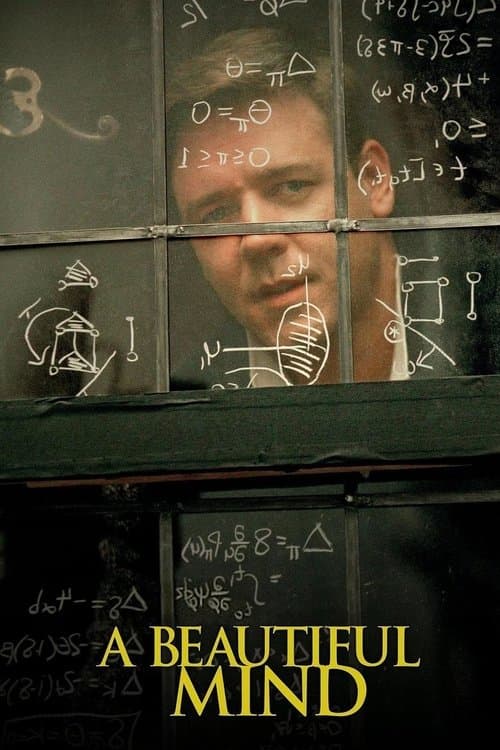
A Beautiful Mind
Ron Howard · 2001
The mathematician John Nash develops groundbreaking game theory while battling paranoid schizophrenia — a condition the film initially presents as reality, then reveals as hallucination. A biography structured as a psychological thriller about the nature of perception.
Techniques Used
3 techniques identified in this film
Unreliable Reality
PsychologyA film whose world itself is revealed to be subjective or fabricated — where the boundary between what is real and what the protagonist perceives cannot be determined until the film chooses to reveal it.
How this film uses it
Howard presents Nash's hallucinations — Parcher, Charles, Marcee — with exactly the same visual and narrative authority as reality. No technique signals their unreliability. When the film reveals they are not real, the audience has been fully deceived alongside Nash — the revelation requiring a complete reprocessing of everything seen.
Retroactive Reframing Revelation
NarrativeA climactic revelation that doesn't merely surprise — it retroactively transforms the meaning of every preceding scene, requiring the audience to reconstruct the entire film with new knowledge.
How this film uses it
After the revelation of Nash's schizophrenia, every scene the audience watched with one meaning now carries another. The government conspiracy was personal delusion. Parcher's threats were Nash's own terror. The film must be mentally reassembled from scratch — and Howard constructed the first act specifically so that this reassembly reveals a coherent alternate account.
Unreliable Narrator
NarrativeA protagonist through whose perspective we experience events — but whose perception is limited, distorted, or systematically deceived — making the audience's knowledge dependent on an imperfect source.
How this film uses it
We have no access to Nash's world except through Nash's perception. Howard never positions the camera outside Nash's subjectivity during the first act — there is no objective eye to consult. The audience cannot know what Nash does not know, and what Nash does not know is that his reality is partially constructed by his own mind.
You Might Also Like
Films that share at least one technique with A Beautiful Mind
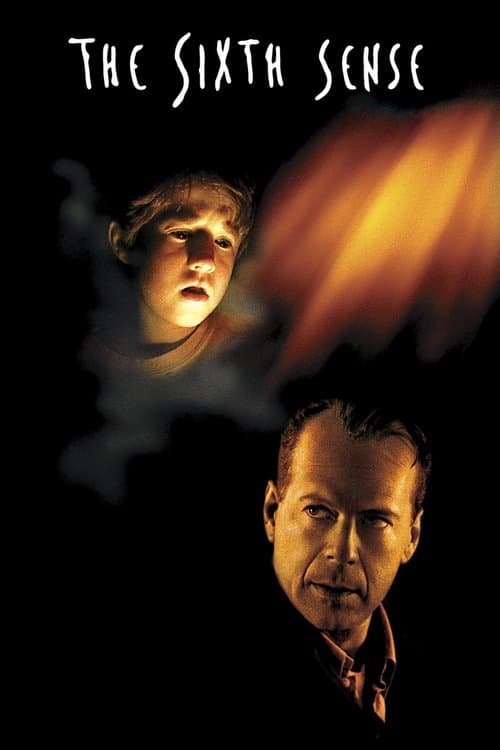
A child psychologist works with a troubled young boy who claims he can see dead people — and the film's final revelation retroactively transforms everything the audience thought they were watching. The most precisely constructed twist film in Hollywood history.
The Sixth Sense
M. Night Shyamalan · 1999

A U.S. Marshal investigates the disappearance of a patient from a remote island psychiatric facility — and begins to doubt the reality of everything around him. Scorsese's most formally extravagant film uses genre conventions as a trap.
Shutter Island
Martin Scorsese · 2010
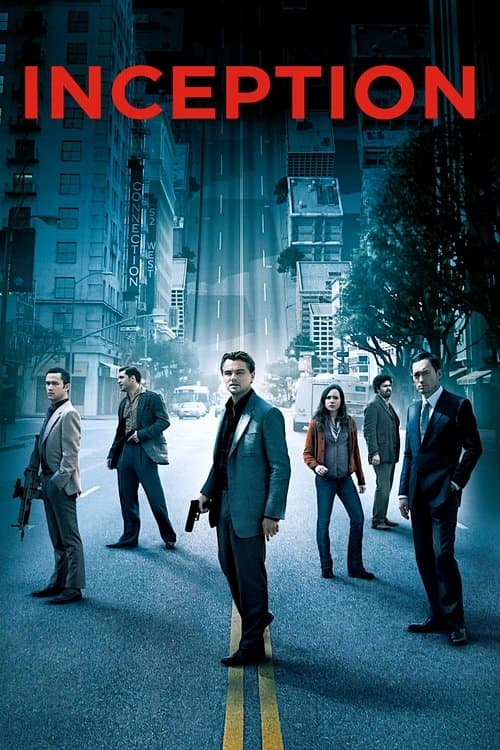
A skilled thief who enters people's dreams is offered a chance to have his criminal record erased if he can implant an idea into a CEO's mind. A labyrinthine heist film about grief, reality, and the architecture of the unconscious.
Inception
Christopher Nolan · 2010