Crime · Drama · Biography

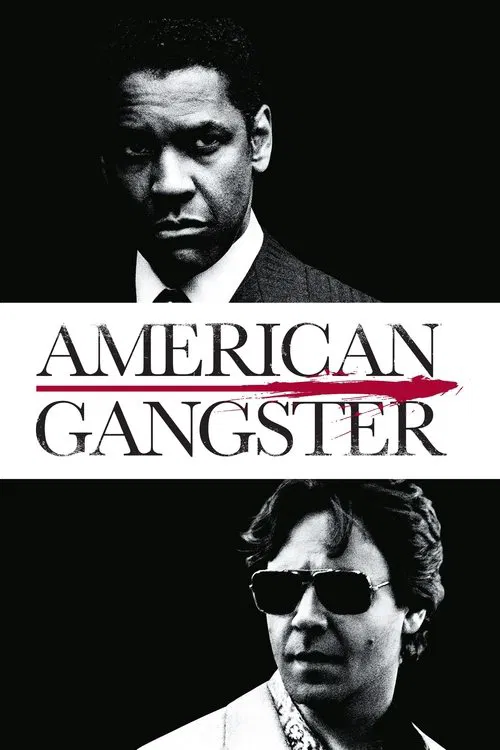
American Gangster

Ridley Scott, 2007

In 1970s New York, Frank Lucas builds a heroin empire in Harlem while Newark detective Richie Roberts closes in. The film is based on real people. Watch how Scott cuts between 2 lives that barely touch until late in the story.

American Gangster (2007) poster

At a glance

American Gangster is a 2007 crime, drama and biography film directed by Ridley Scott. This breakdown covers 5 techniques (1 psychology, 1 editing, 2 cinematography and 1 sound), each with the scene where you can see it. If you like how it is made, Black Swan uses several of the same techniques.

Psychology

Psychological Doubling

Pairing the main character with a second character who mirrors them. The double shows what the hero wants, fears or secretly is.

How this film uses it

Frank and Richie are built as opposites who share something. Scott said he wanted to show the odd values of each man. The wicked gangster runs his business with some ethics, and the do-gooder cop is a womanizer with a failed marriage. Richie hands in almost $1 million he finds, and Frank runs a crime ring like a company. Each shows what the other lacks.

Where to see it

Richie hands in the money: Roberts turns in almost $1 million found in a mobster's car, and his colleagues shun him for it.

Editing

Near-Miss Tracking Structure

Building tension from scenes where 2 characters, or a character and the answer they want, come close and never meet. The dread comes from how near they get.

How this film uses it

Frank and Richie do not meet until about 20 minutes before the end. Scott cut between them to keep both stories moving, with Frank's deals and family on one side and Richie's task force and divorce on the other. The tension comes from how close their paths get without crossing.

Where to see it

The Fight of the Century: Frank attends with his wife Eva, and Richie notices Frank has better seats than the Italian mobsters and starts investigating him.

Cinematography

Handheld Cinema Vérité

Shooting with a handheld camera so the frame shakes and moves with the action. This documentary-style look, called cinema vérité, puts you uncomfortably close to the character.

How this film uses it

Hand-held cameras were used a lot to give the film a raw, 1970s-style realism. The picture shakes and moves with the people on screen, which puts you inside the streets with them instead of looking at them from a safe distance.

Where to see it

The raid on Frank's heroin facility: Roberts' detectives raid the processing site, and Frank's nephew Stevie is killed and his brother Huey is arrested.

Sound

Cultural Musical Identity

Writing music with its own instruments, rhythms and melodies for each culture in the film, or drawing on a real culture's musical traditions. The score tells you about the people.

How this film uses it

Composer Marc Streitenfeld added shades of blues and soul to his score to fit the 1970s setting. The soundtrack album includes songs by Bobby Womack, The Staple Singers, Sam & Dave and John Lee Hooker. Scott felt it was vital to have the kind of music that was Harlem at the time.

Where to see it

Frank's rise: after Bumpy Johnson dies of a heart attack, Frank steps into the heroin trade and starts selling "Blue Magic."

Cinematography

Real Locations as Character

Filming in recognizable real places so the setting acts like part of the cast. Streets, buildings and landscapes shape the mood of the story.

How this film uses it

The shoot used more than 180 locations, most of them in New York, which was a record. Scott found Harlem interiors that had not changed since the 1940s. He remembered a shabby neighborhood of beautiful brownstones falling apart, and the film looks for that. Frank's headquarters was shot on 136th Street, 20 blocks north of where the story puts it.

Where to see it

Frank's headquarters: the building where Frank runs his heroin business in Harlem.

Questions

American Gangster: quick answers

What filmmaking techniques does American Gangster use?
CineCode breaks down 5 techniques in American Gangster (2007): Psychological Doubling, Near-Miss Tracking Structure, Handheld Cinema Vérité, Cultural Musical Identity and Real Locations as Character.
Who directed American Gangster?
Ridley Scott directed American Gangster, released in 2007. CineCode also covers The Duellists (1977), Alien (1979), Blade Runner (1982), Legend (1985), Black Rain (1989), Thelma & Louise (1991).
What films are similar to American Gangster?
Films that share techniques with American Gangster include Black Swan (2010), Heat (1995), Inland Empire (2006), Vicky Cristina Barcelona (2008).