Adventure · Drama · History

Exodus: Gods and Kings

Ridley Scott, 2014

Moses, raised as an Egyptian prince, learns he is a Hebrew, is exiled and returns years later to free the slaves. Ramesses will not let them go. The plagues, the death of the firstborn and the crossing of the sea follow. Watch how Scott tries to give each miracle a possible natural cause.

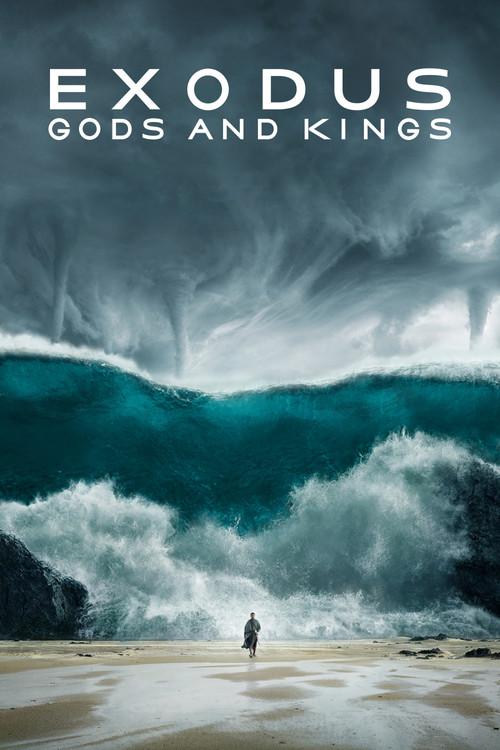
Exodus: Gods and Kings (2014) poster

At a glance

Exodus: Gods and Kings is a 2014 adventure, drama and history film directed by Ridley Scott. This breakdown covers 5 techniques (2 psychology, 2 narrative and 1 cinematography), each with the scene where you can see it. If you like how it is made, 8½ uses several of the same techniques.

Psychology

Psychological Doubling

Pairing the main character with a second character who mirrors them. The double shows what the hero wants, fears or secretly is.

How this film uses it

Moses and Ramesses grow up like brothers. A prophecy says one will save the other in battle, and Moses saves Ramesses. Later the 2 become enemies. Each is what the other might have been: one stays a prince in power, and the other gives up his place to join the slaves.

Where to see it

The prophecy at Kadesh: before the battle, Seti tells Moses and Ramesses that one will save the other, and Moses saves Ramesses.

Narrative

Escalating Moral Stakes

Raising the ethical price of winning with each part of the story. Every compromise the characters make leads to a worse one, until they can't go back.

How this film uses it

The plagues begin as a show of God's power and get worse until the tenth, the death of every firstborn child. Moses is horrified but follows through, and Ramesses's infant son dies. Each step makes it harder to say that winning was worth the cost.

Where to see it

The tenth plague: the Hebrews mark their doors with lambs' blood, and that night Egypt's firstborn children die, including Ramesses's infant son.

Psychology

Unreliable Reality

Keeping it unclear what is real and what is imagined in the film's world. You end up as unsure as the main character.

How this film uses it

After a rockslide injures him, Moses hears a voice through a burning bush that sends him to free the Hebrews with the guidance of a boy named Malak. The film gives you reasons to doubt him and reasons to believe. One reading is that a hurt man sees what he needs to see. Another is that a god is speaking.

Where to see it

The burning bush: Moses is hurt in a rockslide and hears a voice telling him to free the Hebrews.

Narrative

Sacred Story Reframed

Retelling a religious figure or miracle in human or natural terms, so the sacred story is read through doubt, desire and real events.

How this film uses it

Scott said he wanted the miracles to have natural causes, such as a tsunami draining the sea. Effects supervisor Peter Chiang said the aim was for it to feel like a natural event, with no one waving a stick at the water. After Moses throws his sword into the sea, a comet crashes into it, and by morning the water has pulled back into a path.

Where to see it

The sword in the sea: in despair at the shore, Moses flings his sword into the water, a comet strikes and the sea splits by morning.

Cinematography

Digital Crowd Simulation

Filling the frame with computer-generated crowds, either multiplied from a few real extras or driven by software. The scale feels epic without needing thousands of people.

How this film uses it

The film shows about 400,000 people in total. Only 30 to 40 of them crossed the sea bed with Christian Bale, and the rest were digital. More than 1,500 effects shots built up the Hebrews' ranks. Close-ups of people fleeing across the sea bed used the beach's real water.

Where to see it

The Red Sea crossing: Moses leads the Hebrews along the sea bed while the Egyptian army chases them, and the sea closes on most of the army.

Questions

Exodus: Gods and Kings: quick answers

What filmmaking techniques does Exodus: Gods and Kings use?
CineCode breaks down 5 techniques in Exodus: Gods and Kings (2014): Psychological Doubling, Escalating Moral Stakes, Unreliable Reality, Sacred Story Reframed and Digital Crowd Simulation.
Who directed Exodus: Gods and Kings?
Ridley Scott directed Exodus: Gods and Kings, released in 2014. CineCode also covers The Duellists (1977), Alien (1979), Blade Runner (1982), Legend (1985), Black Rain (1989), Thelma & Louise (1991).
What films are similar to Exodus: Gods and Kings?
Films that share techniques with Exodus: Gods and Kings include 8½ (1963), Persona (1966), The Lighthouse (2019), Perfect Blue (1997).