Mystery · Crime

Murder on the Orient Express

Sidney Lumet, 1974

In 1935, a rich American is found stabbed on the Orient Express, which is stuck in a snowdrift. Detective Hercule Poirot questions a carriage full of passengers who all seem to have something to hide. It is a good case study in how a big ensemble can hold a mystery in one place.

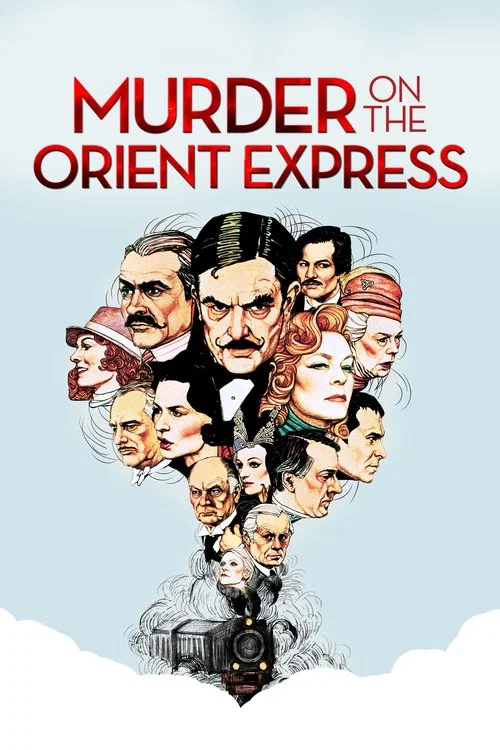
Murder on the Orient Express (1974) poster

At a glance

Murder on the Orient Express is a 1974 mystery and crime film directed by Sidney Lumet. This breakdown covers 5 techniques (1 cinematography, 3 narrative and 1 psychology), each with the scene where you can see it. If you like how it is made, The Handmaiden uses several of the same techniques.

Cinematography

Single-Location Cinematography

Shooting almost the whole film in 1 confined place. Set design and camera movement keep it visually interesting, and the space itself takes on meaning as the story goes on.

How this film uses it

Once the train is stranded, the story stays in its compartments and corridors. Each interview takes place a few steps from the last, so you stay close to the suspects and notice small details.

Where to see it

The snowdrift: During the night a snowdrift in Yugoslavia strands the train. The next morning Ratchett is found dead, drugged and stabbed twelve times.
Narrative

Multiple Resolution Structure

Giving the film several endings. They can come one after another to close different emotional threads, or they can conflict and leave you to weigh competing versions.

How this film uses it

Poirot offers two solutions: an outsider killed Cassetti for revenge, or the passengers are all connected. The first is easy and the second is the truth. The film leaves it to the group, and you, to decide which one to accept.

Where to see it

Poirot's two solutions: Poirot assembles the suspects and describes two versions of the murder. The first has an outsider killing Cassetti. The second links all the suspects.

Narrative

The Long Reveal

Holding back a key piece of information for a large part of the film, then revealing it in 1 moment. Everything you already watched now means something different.

How this film uses it

The film holds back the fact that every suspect has a link to the Armstrong family until the end. Once you know, the small details in each interview mean something else.

Where to see it

The explanation: Poirot shows how the passengers connect to the Armstrong household, including the cook, the nursemaid and the godmother of the child's mother.

Narrative

Community as Tribunal

Showing a community turn into its own informal court, outside the legal system. Mob logic and social pressure take the place of legal process, the same way a rumor hardens into a conviction.

How this film uses it

The passengers are not the law, yet they act as judge and jury for a man who escaped trial after a child's death. Poirot and Bianchi must decide whether to accept that, and the film does not make it easy.

Where to see it

Cassetti's identity: Poirot finds a charred letter showing that Ratchett is the gangster Cassetti, who kidnapped and killed Daisy Armstrong and fled the country.

Psychology

Shared Secret Guilt

Binding several characters together through a secret wrong that they hold, confess or hide. The guilt is spread among them and shapes how they treat one another.

How this film uses it

No single passenger carries the whole blame. The second solution makes everyone a conspirator, so the crime belongs to the group, and you find it hard to call it plain murder.

Where to see it

The second solution: Poirot's version links every suspect to the Armstrong household, so the stabbing was an act of the whole carriage.

Questions

Murder on the Orient Express: quick answers

What filmmaking techniques does Murder on the Orient Express use?
CineCode breaks down 5 techniques in Murder on the Orient Express (1974): Single-Location Cinematography, Multiple Resolution Structure, The Long Reveal, Community as Tribunal and Shared Secret Guilt.
Who directed Murder on the Orient Express?
Sidney Lumet directed Murder on the Orient Express, released in 1974. CineCode also covers 12 Angry Men (1957), Fail Safe (1964), Serpico (1973), Dog Day Afternoon (1975), Network (1976), The Verdict (1982).
What films are similar to Murder on the Orient Express?
Films that share techniques with Murder on the Orient Express include The Handmaiden (2016), Stalag 17 (1953), Key Largo (1948), Project Hail Mary (2026).