Drama · Fantasy · Adventure

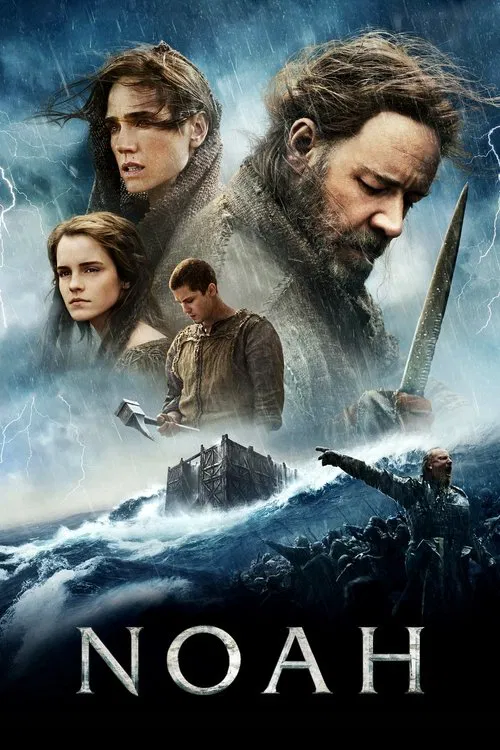
Noah

Darren Aronofsky, 2014

Noah has dreams of a great flood and builds an ark with his family and a group of fallen-angel giants. Aronofsky treats the Bible story as dark, strange fantasy. Look for how ILM built both the creation montage and the stone giants.

Noah (2014) poster

At a glance

Noah is a 2014 drama, fantasy and adventure film directed by Darren Aronofsky. This breakdown covers 4 techniques (2 narrative, 1 cinematography and 1 editing), each with the scene where you can see it. If you like how it is made, The Treasure of the Sierra Madre uses several of the same techniques.

Narrative

Sacred Story Reframed

Retelling a religious figure or miracle in human or natural terms, so the sacred story is read through doubt, desire and real events.

How this film uses it

The film retells the flood as a harsh, human story. Noah is haunted and uncertain, and the family fights about what God wants. Fallen angels made of stone help build the ark, and the miracles feel strange and physical.

Where to see it

Noah's decision about the twin girls. He prepares to kill a newborn and finally spares the babies.
Narrative

Escalating Moral Stakes

Raising the ethical price of winning with each part of the story. Every compromise the characters make leads to a worse one, until they can't go back.

How this film uses it

Each part of the story asks Noah to give up something more. First he must save only his family, then he decides the family must end with him. By the time the babies are born, the stakes are the hardest ones.

Where to see it

The births. Ila gives birth to twin girls, and Noah has to choose whether to keep his vow.

Cinematography

Landscape as Sacred Geography

Photographing real landscapes like mountains, plains and rivers so they feel mythic and full of meaning. The land becomes a spiritual and moral test the characters have to cross.

How this film uses it

Principal photography took place in southern Iceland, and the bare volcanic ground looks like the start of the world. The land feels both ancient and hostile. It makes the story seem to happen at the edge of time. Your eye reads the place as a test before any character speaks.

Where to see it

Noah seeks Methuselah. After his dream of a great flood, he goes to his grandfather for guidance.

Editing

Time Compression Editing

Squeezing long spans of story time into a few minutes of cutting, so you feel how years pass, routines harden or a relationship deepens without seeing every step.

How this film uses it

ILM created a roughly 2-minute sequence showing the creation of the world, from stars to life. Another effect shows a seed from Eden sprouting a forest in moments. You see time itself move.

Where to see it

The seed from Eden. Methuselah gives Noah the seed, and the next morning water spouts from the spot where he planted it and a forest grows around the Watchers.

Questions

Noah: quick answers

What filmmaking techniques does Noah use?
CineCode breaks down 4 techniques in Noah (2014): Sacred Story Reframed, Escalating Moral Stakes, Landscape as Sacred Geography and Time Compression Editing.
Who directed Noah?
Darren Aronofsky directed Noah, released in 2014. CineCode also covers Pi (1998), Requiem for a Dream (2000), The Fountain (2006), The Wrestler (2008), Black Swan (2010), mother! (2017).
What films are similar to Noah?
Films that share techniques with Noah include The Treasure of the Sierra Madre (1948), The Last Temptation of Christ (1988), Silence (2016), Thelma & Louise (1991).