Drama · Romance

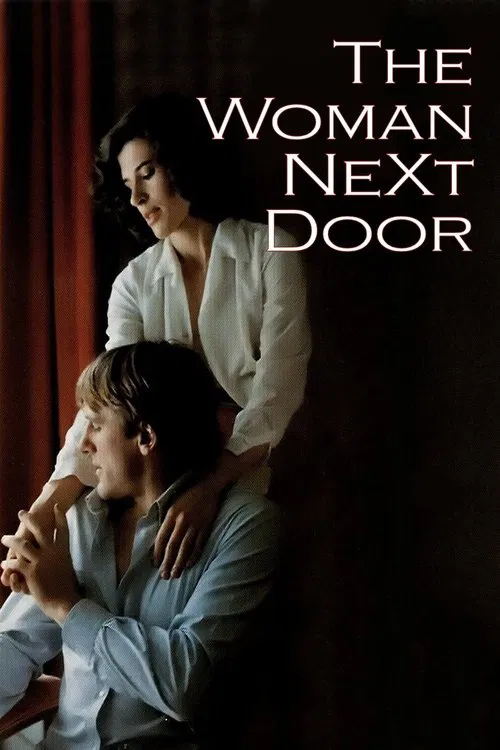
The Woman Next Door

François Truffaut, 1981

Bernard lives happily with his wife and son in a village near Grenoble until his old lover Mathilde moves in next door with her husband. Their stormy affair ended badly years ago, and now it starts again. Truffaut builds a small-town love story that moves toward a tragic ending.

The Woman Next Door (1981) poster

At a glance

The Woman Next Door is a 1981 drama and romance film directed by François Truffaut. This breakdown covers 4 techniques (1 narrative, 2 psychology and 1 cinematography), each with the scene where you can see it. If you like how it is made, You Can Count on Me uses several of the same techniques.

Narrative

Myth Retold in Modern Setting

Mapping an ancient myth, epic or historical event onto a contemporary or invented setting, so the old pattern gives the new story weight and inevitability.

How this film uses it

The film recalls the medieval legend of Tristan and Iseult, in which a couple's love cannot survive in the world. Here the lovers are ordinary, middle-class people in a provincial town. The old story gives their mess a sense of fate.

Where to see it

The ending. Mathilde and Bernard meet in the empty house next door, have sex on the bare floor, and she shoots him and then herself.

Psychology

Attraction Against Judgment

Letting a character fall for someone they should distrust or oppose. Desire overrides suspicion, so the romance becomes a source of risk and comic or tragic tension.

How this film uses it

Bernard and Mathilde know from their past that being together is painful. They still start an affair in secret, while openly acting like good neighbors. The tension comes from watching two smart people ignore the warning signs.

Where to see it

The supermarket meeting. A chance encounter wakes up their old feelings and leads to the secret affair.

Cinematography

Small Town as Moral Geography

Treating a small town as more than a setting. Its buildings, lighting and relationships show the community's values and limits, which shape what the characters can do and what gets destroyed.

How this film uses it

The village near Grenoble is small enough that everyone sees everything. Garden parties and a tennis club become places where private feelings are judged in public. Mathilde's collapse at the club could not happen in a big city.

Where to see it

The garden party. Bernard reveals his violent passion for Mathilde in front of the guests.

Psychology

Repressed Emotion

Showing a character who holds feelings down until they leak out or burst. The performance lives in what is withheld, and the release lands harder for the wait.

How this film uses it

Both lovers try to live normal family lives and hold their feelings down. The strain shows up as outbursts in public. Bernard cracks first, then Mathilde follows.

Where to see it

The tennis club. Mathilde collapses in public and is hospitalized with depression.

Questions

The Woman Next Door: quick answers

What filmmaking techniques does The Woman Next Door use?
CineCode breaks down 4 techniques in The Woman Next Door (1981): Myth Retold in Modern Setting, Attraction Against Judgment, Small Town as Moral Geography and Repressed Emotion.
Who directed The Woman Next Door?
François Truffaut directed The Woman Next Door, released in 1981. CineCode also covers The 400 Blows (1959), Shoot the Piano Player (1960), Jules and Jim (1962), Fahrenheit 451 (1966), Stolen Kisses (1968), Bed and Board (1970).
What films are similar to The Woman Next Door?
Films that share techniques with The Woman Next Door include You Can Count on Me (2000), It's a Wonderful Life (1946), Fargo (1996), Three Billboards Outside Ebbing, Missouri (2017).