Drama · War · Adventure

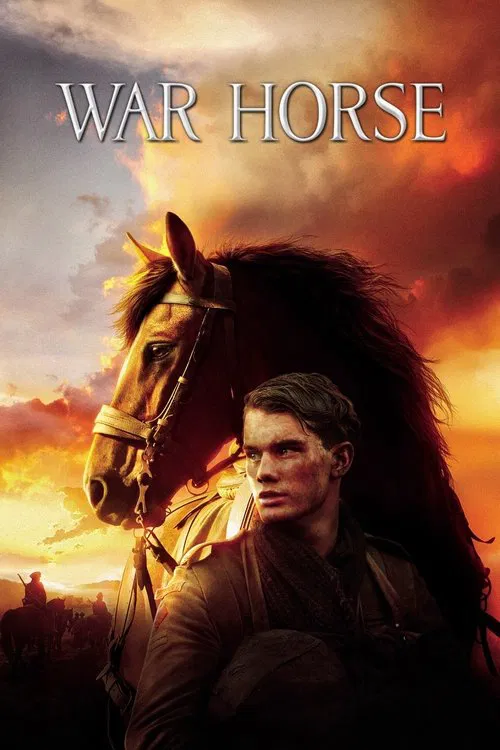
War Horse

Steven Spielberg, 2011

A boy trains a young horse named Joey, and then World War I takes the animal across Europe, from English fields to the trenches. The film follows the horse through many hands. For filmmakers, watch how a war story can be told through a character that cannot speak.

War Horse (2011) poster

At a glance

War Horse is a 2011 drama, war and adventure film directed by Steven Spielberg. This breakdown covers 5 techniques (2 narrative, 2 cinematography and 1 editing), each with the scene where you can see it. If you like how it is made, The Big Lebowski uses several of the same techniques.

Narrative

Picaresque Structure

Telling the story as a loose string of separate adventures, often following a low-status hero through different levels of society. With no single plot, the episodes add up to a portrait of a world.

How this film uses it

Joey passes from owner to owner, and each stop gives a new little story with new people. A British officer, German brothers, a French girl and soldiers on both sides all get a stretch with him. Together the pieces become a portrait of the war.

Where to see it

The journey: Joey is sold to the army, captured by Germans and found by a French girl, and each owner gets a short chapter.
Cinematography

Color Palette as Worldbuilding

Limiting the film to a tightly chosen set of colors, or giving each place or state its own set. The colors tell you about the world and its mood without dialogue.

How this film uses it

The Devon farm glows with warm gold light and big skies, and the war scenes turn cold and gray. The change in color tells you what the horse has lost. You feel the distance from home before anyone says it.

Where to see it

The Devon fields: Albert and Joey plow a rocky field in warm light, and the later war scenes use colder colors.

Cinematography

Off-Screen Atrocity

Keeping the worst violence outside the frame. You hear it or see its effects and other people's reactions, and your imagination does the rest.

How this film uses it

The cavalry charge ends with horses coming out of the smoke without riders. The deaths are not shown. The empty saddles say it all and leave you to picture what happened.

Where to see it

The cavalry charge: British cavalry ride into a German camp, and horses return alone after the machine guns open fire.

Editing

Callback Editing

Bringing back an earlier image, line, location or piece of staging later in the film, often with the situation reversed. You enjoy recognizing it, and the comparison adds meaning.

How this film uses it

Early on, Albert ties his father's regimental pennant to Joey's bridle and promises to find him. That promise hangs over every later scene of the horse's journey. When the two meet again, it pays off.

Where to see it

The reunion: Near the end, Albert, temporarily blinded by gas, proves Joey is his horse by describing his markings, and the two go home together.

Narrative

Outsider Viewpoint

Telling the story through someone at the margin, such as a lowly servant, an animal or a drifter, so the world looks different from their position.

How this film uses it

The film follows Joey, so people matter by how they treat him. A tender German soldier and a cruel officer are defined in a few moments. You judge the war through its effect on one animal.

Where to see it

No man's land: Joey runs into barbed wire between the trenches, and a British soldier and a German soldier work together to free him.

Questions

War Horse: quick answers

What filmmaking techniques does War Horse use?
CineCode breaks down 5 techniques in War Horse (2011): Picaresque Structure, Color Palette as Worldbuilding, Off-Screen Atrocity, Callback Editing and Outsider Viewpoint.
Who directed War Horse?
Steven Spielberg directed War Horse, released in 2011. CineCode also covers Duel (1971), Jaws (1975), Close Encounters of the Third Kind (1977), 1941 (1979), Raiders of the Lost Ark (1981), E.T. the Extra-Terrestrial (1982).
What films are similar to War Horse?
Films that share techniques with War Horse include The Big Lebowski (1998), Asteroid City (2023), Her (2013), Forrest Gump (1994).