Cinematography technique · used in 8 films

Hard Science Fiction Aesthetics

Designing a science fiction world around real science and believable extensions of today's technology and cities. The physics creates the drama, and the future feels connected to the present.

Examples

8 films that use it

  1. Blade Runner (1982) poster

    Blade Runner

    Ridley Scott · 1982

    Scott and designer Syd Mead built Los Angeles 2019 by stretching the trends of 1982 forward: more advertising, more crowding, more decay and technology layered over Victorian architecture. This city was never rebuilt, and new layers just kept piling onto the old ones. That pile-up is how the film shows what capitalism and neglect produce over time.

    Where to see it: The aerial approach to 2019 Los Angeles. You see oil refinery flames, neon advertising and constant rain. The city looks like decades of pile-up.

  2. Children of Men (2006) poster

    Children of Men

    Alfonso Cuarón · 2006

    Cuarón and production designer Jim Clay design 2027 Britain as 2006 Britain with 20 more years of neglect. The cars look like the ones on the road now. The buildings have been patched and never rebuilt, and the refugee camps are made of materials you recognize. This future is worked out from the present, and nothing is imagined from scratch. So you can't wave away what it says about immigration and state violence as fantasy.

    Where to see it: The refugee cages at Bexhill. The detention site is built from familiar present-day materials. The near future shows up looking like now, so you don't get the comfort of it seeming strange.

  3. Sunshine (2007) poster

    Sunshine

    Danny Boyle · 2007

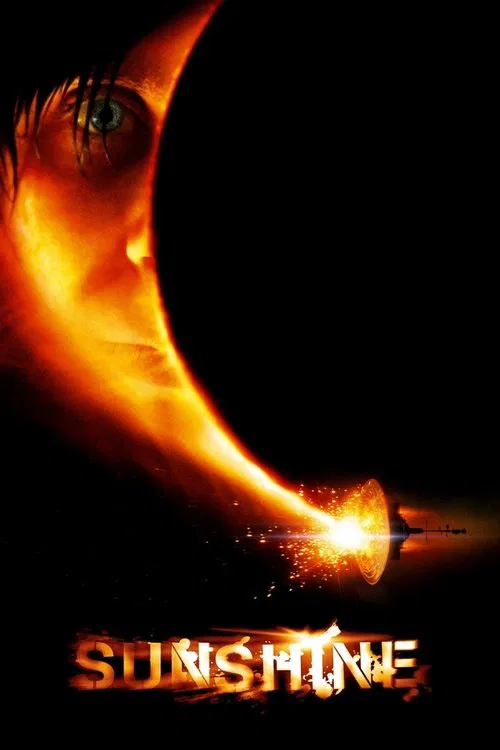
    The production consulted NASA and physicist Brian Cox. The gold-leaf shielding was inspired by NASA satellite designs. A few errors were kept for the drama, such as the whooshing ship, and some scientists criticized them.

    Where to see it: Shield repair: A navigator's mistake damages the reflective panels. Cassie angles the ship into Mercury's shadow while Kaneda and Capa go out to repair the shield.

  4. Interstellar (2014) poster

    Interstellar

    Christopher Nolan · 2014

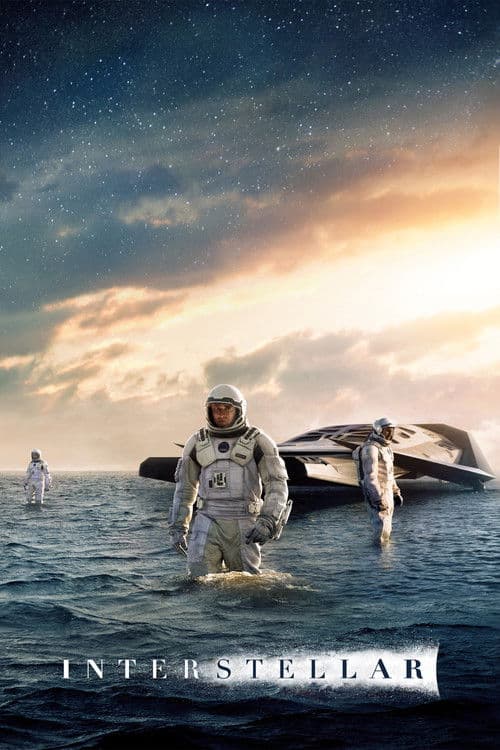
    Kip Thorne, the Nobel Prize-winning physicist, served as scientific consultant and executive producer. The wormhole and the black hole Gargantua are based on his equations. As a matter of fact, rendering Gargantua produced new scientific insights about gravitational lensing (gravity bending light), which were published in peer-reviewed journals.

    Where to see it: The first view of Gargantua. It's a scientifically accurate black hole rendered at feature film resolution.

  5. The Martian (2015) poster

    The Martian

    Ridley Scott · 2015

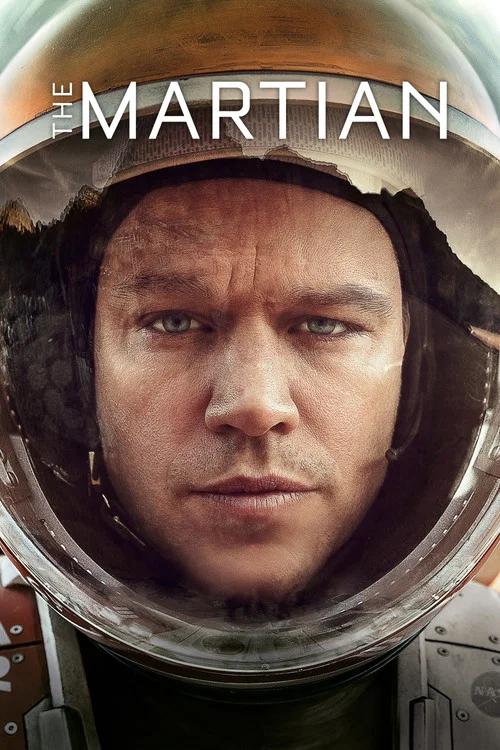
    NASA advised the production, answering hundreds of questions about habitats, radioisotope systems and how mission control looks. Watney's way of making water is chemically accurate and theoretically possible. The rescue plan relies on a real gravity assist. The drama comes from real limits like food, power and distance.

    Where to see it: Surviving in the Hab: left alone, Watney grows potatoes using the crew's waste and Martian soil, and makes water from leftover rocket fuel.

  6. Arrival (2016) poster

    Arrival

    Denis Villeneuve · 2016

    The heptapod logograms, the aliens' written symbols, were designed with advice from linguists. The premise is that mastering an alien language rewires how a human thinks, and it is rooted in the real Sapir-Whorf hypothesis. The film treats its science fiction as a real event in how humans know things, and never as a plot device.

    Where to see it: Louise's first attempts to decode the logograms. The film shows the step-by-step method of learning the language. The science fiction is framed as a real research problem.

  7. Blade Runner 2049 (2017) poster

    Blade Runner 2049

    Denis Villeneuve · 2017

    The world of 2049 grows out of the original film's 2019 with specific ecological detail. The sea walls, the protein farms and the failed ecosystems all follow from a believable path of climate change. This science fiction offers no escape from the present. It works out, like an investigation, where the present leads.

    Where to see it: The orphanage ruins. Ecological collapse is shown as a specific, physical result. The world is built from details you can observe, and nobody stops to explain it.

  8. Annihilation (2018) poster

    Annihilation

    Alex Garland · 2018

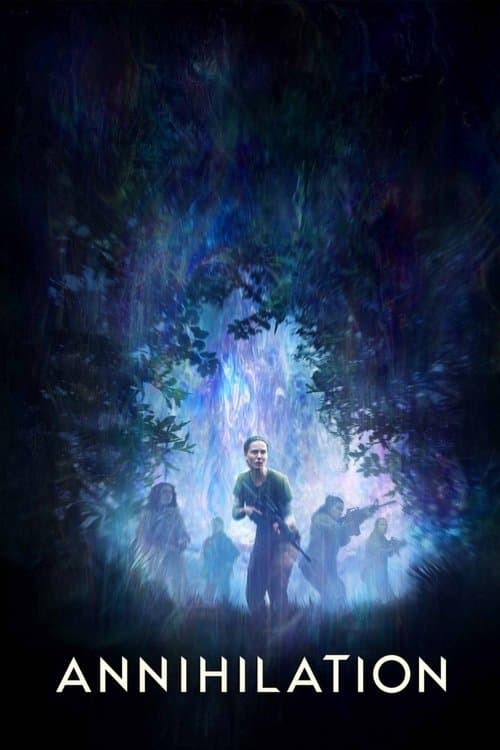
    The film explains how the Shimmer works through refraction: light, radio waves and DNA all bend. As cliche as it sounds, giving scientific words to something that can't be explained makes it more frightening.

    Where to see it: The biologist's explanation of the Shimmer as a prism refracting everything inside it. The film's images and story are then organized around that comparison.

Questions

Quick answers

What is hard science fiction aesthetics in film?
Designing a science fiction world around real science and believable extensions of today's technology and cities. The physics creates the drama, and the future feels connected to the present.
Which films use hard science fiction aesthetics?
Blade Runner (1982), Children of Men (2006), Sunshine (2007), Interstellar (2014), The Martian (2015), Arrival (2016) and 2 more films in the CineCode library.
What kind of technique is hard science fiction aesthetics?
It is a cinematography technique. Related cinematography techniques include Color Palette as Worldbuilding, Chiaroscuro Lighting, Used Universe Aesthetic.