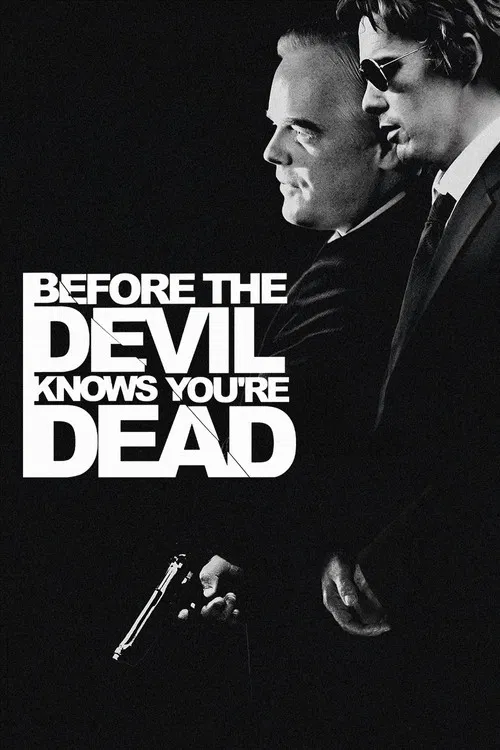
Crime · Drama · Thriller

Before the Devil Knows You're Dead

Sidney Lumet, 2007

Two brothers who both need money rob their own parents' jewelry store, expecting nobody to get hurt. The robbery goes wrong, and the family unravels in the days after. Worth watching as a filmmaker for how it jumps around in time so you learn what really happened in pieces.

Before the Devil Knows You're Dead (2007) poster

At a glance

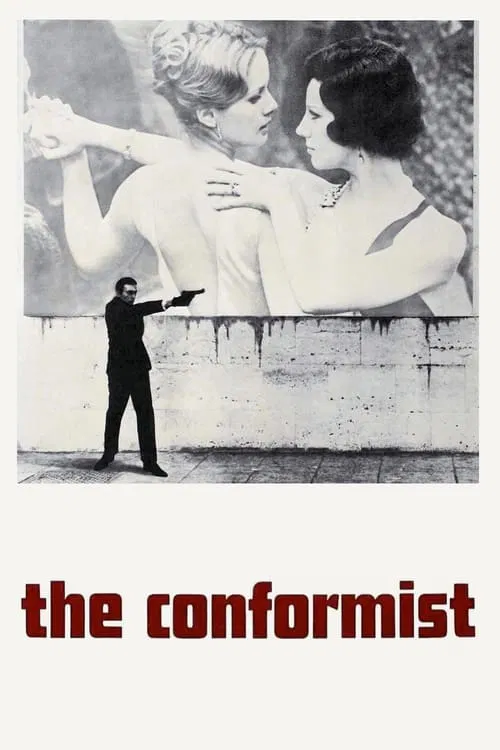
Before the Devil Knows You're Dead is a 2007 crime, drama and thriller film directed by Sidney Lumet. This breakdown covers 4 techniques (2 narrative, 1 psychology and 1 cinematography), each with the scene where you can see it. If you like how it is made, The Conformist uses several of the same techniques.

Narrative

Non-Linear Narrative

Telling the story out of order by jumping between time periods. The order you see events in changes how you understand them.

How this film uses it

The film jumps between the day of the robbery and the days before and after it. Some scenes come back more than once, so you see the same events with new information. You keep re-judging the brothers as the order of events shifts.

Where to see it

The robbery sequence. You see the robbery at the jewelry store go wrong, and later scenes return to it and fill in what led there.

Narrative

Escalating Moral Stakes

Raising the ethical price of winning with each part of the story. Every compromise the characters make leads to a worse one, until they can't go back.

How this film uses it

Andy sells the robbery to Hank as a crime with no victims, since the store is insured and only an older employee should be there. Each fix for the first mistake costs more than the last, and the story moves from theft to blackmail to killing.

Where to see it

The shootout in the jewelry store. Their mother is covering the counter, and the plan that was meant to hurt nobody ends with Bobby dead and her mortally wounded.

Psychology

Psychological Doubling

Pairing the main character with a second character who mirrors them. The double shows what the hero wants, fears or secretly is.

How this film uses it

Andy and Hank are brothers with the same problem, which is money, and they handle it in opposite ways. Andy is the confident schemer and Hank is the one who panics. One reading is that each shows the other what he could have turned into.

Where to see it

The scenes where Andy pitches the plan to Hank. You watch one brother push and the other give in, and the gap between them is clear.

Cinematography

Digital Camera Capture

Shooting on digital cameras or even smartphones instead of film stock. Small, light cameras let the crew work fast and go places large ones cannot, giving a plain, immediate image.

How this film uses it

Lumet shot the film on a digital camera system, the Panavision Genesis, after trying digital video on an earlier TV series. He said he found shooting on film a hassle. The picture has a plain, close look that suits a story about ordinary people in over their heads.

Where to see it

The robbery at the strip mall store. The scene is shot in the same plain, direct style as the quiet family scenes around it.

Questions

Before the Devil Knows You're Dead: quick answers

What filmmaking techniques does Before the Devil Knows You're Dead use?
CineCode breaks down 4 techniques in Before the Devil Knows You're Dead (2007): Non-Linear Narrative, Escalating Moral Stakes, Psychological Doubling and Digital Camera Capture.
Who directed Before the Devil Knows You're Dead?
Sidney Lumet directed Before the Devil Knows You're Dead, released in 2007. CineCode also covers 12 Angry Men (1957), Fail Safe (1964), Serpico (1973), Murder on the Orient Express (1974), Dog Day Afternoon (1975), Network (1976).
What films are similar to Before the Devil Knows You're Dead?
Films that share techniques with Before the Devil Knows You're Dead include The Conformist (1970), Exodus: Gods and Kings (2014), Mirror (1975), Collateral (2004).