Mystery · Thriller · Drama

Enemy

Denis Villeneuve, 2014

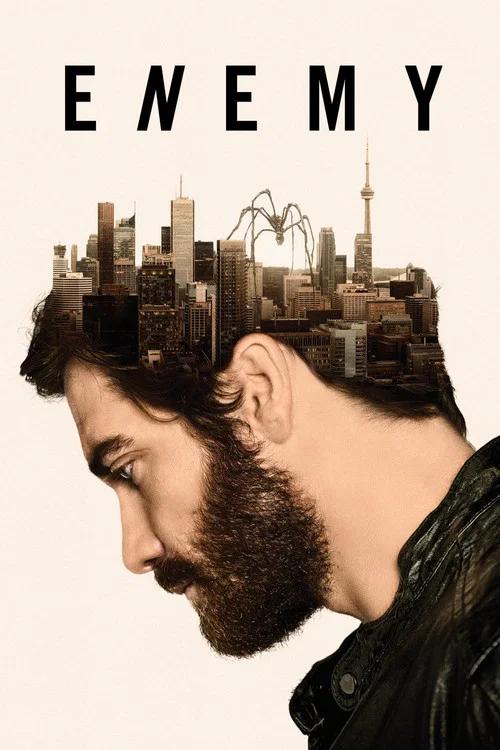
A Toronto history professor spots an actor in a movie who looks exactly like him and becomes obsessed with finding him. The 2 men's lives start to swap and spiders keep turning up. It is a strange, creepy puzzle, and Villeneuve wants you to feel uneasy more than he wants to explain it.

Enemy (2014) poster

At a glance

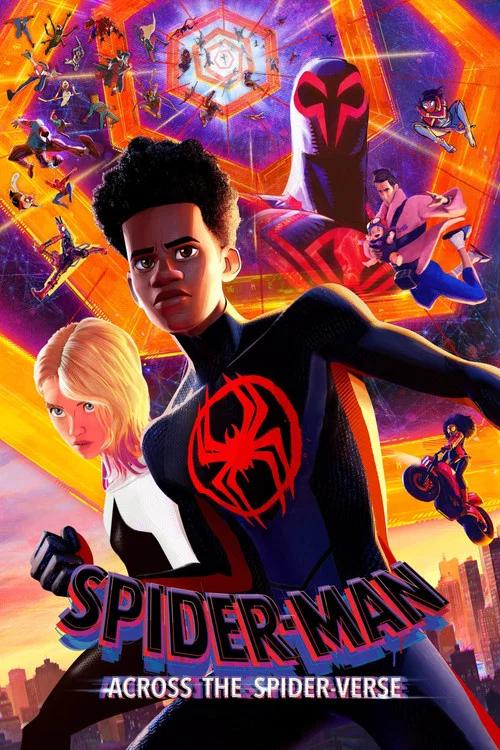
Enemy is a 2014 mystery, thriller and drama film directed by Denis Villeneuve. This breakdown covers 4 techniques (1 psychology, 1 cinematography, 1 narrative and 1 editing), each with the scene where you can see it. If you like how it is made, Spider-Man: Across the Spider-Verse uses several of the same techniques.

Psychology

Psychological Doubling

Pairing the main character with a second character who mirrors them. The double shows what the hero wants, fears or secretly is.

How this film uses it

Adam Bell is a professor, and Anthony Claire is the actor who looks exactly like him. Each man wants what the other has, and Anthony pushes Adam into letting him take Adam's place for a night. The doubles show what each man is hiding from himself.

Where to see it

Adam finds Anthony. After seeing the actor in a movie, Adam tracks him down, and the 2 meet.
Cinematography

Color Grading as Psychology

Adjusting the film's overall color, such as how warm, cold or vivid it looks, to match a character's emotional state. It can also separate different realities or states of mind.

How this film uses it

The film's picture has a yellow tint, so Toronto looks dusty and sick. The grade makes the city feel like a space where something is wrong, in a hushed, strangely oppressive way. You can feel Adam's unease before he says a word.

Where to see it

The city. Toronto streets and buildings appear in a murky yellow, like air you wouldn't want to breathe.

Narrative

Symbolic Object

Returning to the same physical object again and again until it means more than what it is. It moves the plot and also stands for the film's main ideas.

How this film uses it

Spiders show up again and again: a woman with a spider's head in a dream, a skyscraper-sized spider over the skyline and a shattered car window that forms a web. They stand for the fear that Adam can't face. By the end, the spider is physically in the room.

Where to see it

The final scene. Adam, dressed in Anthony's clothes, goes looking for Helen and finds a room-sized tarantula instead.

Editing

In-Camera and Compositing Tricks

Using effects such as reverse motion, split performances or live action mixed with animation to place impossible things in one frame. The trick is part of the show.

How this film uses it

Enemy puts Jake Gyllenhaal on screen as both Adam and Anthony. A motion-controlled camera on a dolly was used for the scenes where the lookalikes meet, and a tennis ball helped him keep a consistent eyeline. The result is a duo you rarely question.

Where to see it

The first meeting. Adam and Anthony stand in the same room for the first time.

Questions

Enemy: quick answers

What filmmaking techniques does Enemy use?
CineCode breaks down 4 techniques in Enemy (2014): Psychological Doubling, Color Grading as Psychology, Symbolic Object and In-Camera and Compositing Tricks.
Who directed Enemy?
Denis Villeneuve directed Enemy, released in 2014. CineCode also covers Polytechnique (2009), Incendies (2010), Prisoners (2013), Sicario (2015), Arrival (2016), Blade Runner 2049 (2017).
What films are similar to Enemy?
Films that share techniques with Enemy include Spider-Man: Across the Spider-Verse (2023), Sanjuro (1962), Rumble Fish (1983), Moby Dick (1956).