Horror · Thriller · Crime

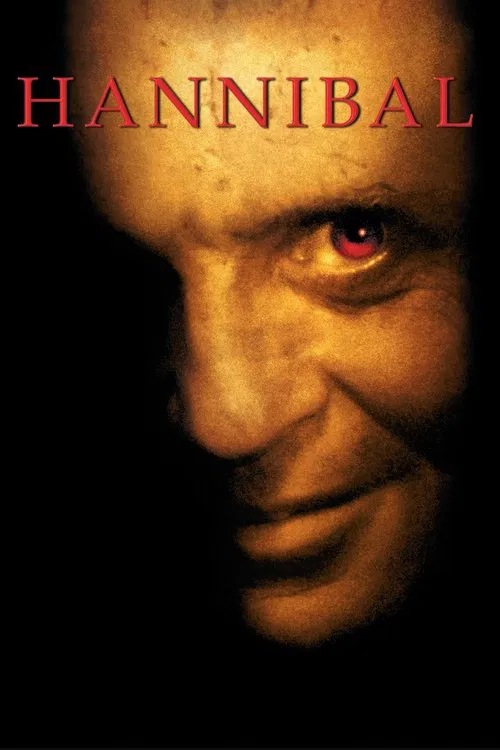
Hannibal

Ridley Scott, 2001

Ten years after his escape, Hannibal Lecter hides in Florence while FBI agent Clarice Starling is disgraced and the scarred millionaire Mason Verger plots his revenge. It is a horror film dressed as an opera. Watch how Scott mixes beauty, romance and gore in the same scene.

Hannibal (2001) poster

At a glance

Hannibal is a 2001 horror, thriller and crime film directed by Ridley Scott. This breakdown covers 5 techniques (1 editing, 2 narrative, 1 psychology and 1 sound), each with the scene where you can see it. If you like how it is made, Thirst uses several of the same techniques.

Editing

Title Sequence as Manifesto

Using the opening titles to set up the film's look, tone and psychological feel before the story starts. The sequence is a short preview of the whole style.

How this film uses it

The main titles show pigeons on the cobblestones of an empty Florence square early in the morning. The image slowly turns into the face of Hannibal Lecter. It asks the question the story is built on, which is where he is hiding. The calm, pretty start also sets up the film's mix of beauty and menace.

Where to see it

The opening titles: footage of pigeons in a Florence square morphs into Lecter's face.
Narrative

Genre Collage

Mixing several genres in 1 film, such as crime, romance, horror and absurd comedy. The clash between them keeps you from settling into a single way of watching.

How this film uses it

The film is a horror story, a police thriller, a dark romance and a black comedy at once. Scott has said he saw affection as the film's underlying emotion and called it romantic and humorous as well as dark. A single scene can be gross, funny and tender together.

Where to see it

The dinner with Krendler: Starling wakes in Krendler's home, and Lecter serves dinner. He opens Krendler's skull, sautés part of his brain and feeds it to him.

Narrative

Obsession as Structural Engine

Building the whole plot on one character's fixation with a person, goal or rival. Every scene ties back to it, and the obsession keeps feeding itself while it destroys them.

How this film uses it

Mason Verger has one goal in life, which is to capture Lecter and kill him slowly. That goal drives most of the plot. Verger gets Starling reassigned, bribes Krendler to frame her and puts a bounty on Lecter that pulls the Florence policeman Pazzi in. Every thread leads back to one man.

Where to see it

The boar pen: Verger's men capture Lecter to feed him to a herd of giant hogs. Starling frees him, and Verger ends up eaten instead.

Psychology

Body Horror

Showing the human body being changed, damaged or falling apart. The horror works because you imagine it happening to your own body, and it often stands for mental suffering.

How this film uses it

Verger is paralyzed and covered in scars. Scott rejected the first 20 heads the makeup team made because they looked like zombies, and he wanted a face that looked real and almost touching. Gary Oldman spent 6 hours a day in makeup. Pazzi's death goes further, since he is disemboweled and hung from a balcony.

Where to see it

Pazzi's death: Lecter forces Pazzi to confess, disembowels him and hangs him from the balcony of the Palazzo Vecchio.

Sound

Elegant Music Against Cruelty

Pairing refined, calm music with ugly or desperate actions. The politeness of the sound makes the behavior look stranger and sadder.

How this film uses it

In Florence, Lecter attends an opera based on a Dante sonnet. Pazzi and his wife Allegra sit nearby, and she asks whether a man could become obsessed with a woman after a single meeting. Lecter says yes. The music and the quiet talk say what the film cannot say outright. Strauss's The Blue Danube also shows up in several scenes.

Where to see it

The Florence opera: Lecter sits near Pazzi and Allegra during a performance, and she asks him if a man could be that obsessed after one encounter.

Questions

Hannibal: quick answers

What filmmaking techniques does Hannibal use?
CineCode breaks down 5 techniques in Hannibal (2001): Title Sequence as Manifesto, Genre Collage, Obsession as Structural Engine, Body Horror and Elegant Music Against Cruelty.
Who directed Hannibal?
Ridley Scott directed Hannibal, released in 2001. CineCode also covers The Duellists (1977), Alien (1979), Blade Runner (1982), Legend (1985), Black Rain (1989), Thelma & Louise (1991).
What films are similar to Hannibal?
Films that share techniques with Hannibal include Thirst (2009), No Other Choice (2025), Death Becomes Her (1992), Everything You Always Wanted to Know About Sex *But Were Afraid to Ask (1972).