
M
Fritz Lang · 1931
A child murderer terrorizes a German city, prompting both the police and the criminal underworld to hunt him down — for different reasons. Lang's first sound film uses the new medium's sonic possibilities to create the first great psychological portrait of a murderer.
Techniques Used
4 techniques identified in this film
Leitmotif
SoundA recurring musical theme attached to a character that identifies and precedes them — its appearance carrying dramatic information before the character is visible.
How this film uses it
Hans Beckert whistles Grieg's 'In the Hall of the Mountain King' — unconsciously, compulsively — and the sound identifies him throughout the film before the audience or characters ever see him clearly. The leitmotif is also a criminal signature: the sound that precedes every child disappearance, the audible mark of a compulsion the murderer cannot control.
Community as Tribunal
NarrativeA community — in this case the criminal underworld — forming its own informal court outside the legal system, with its own procedures and its own verdict.
How this film uses it
The Berlin criminal organizations form a parallel investigation and tribunal to the police — more effective, more motivated, and ultimately more threatening. Beckert is tried in a warehouse by the very people his existence endangers as a business proposition. The film's court scene is the most explicit statement: two justice systems running in parallel, neither fully legitimate.
Panoptic Space Design
CinematographyDesigning the film's spaces as surveillance environments — where observation is built into the architecture — and using this design to map power relationships between those who watch and those who are watched.
How this film uses it
Lang designs the city as a total surveillance network: police maps, informant networks, the organized beggars who mark Beckert with chalk. Every public space is a watched space. The irony is that the criminal underworld's surveillance is more complete than the state's — the film's paranoid city-as-panopticon is maintained by those outside the law.
Perpetrator Perspective
NarrativeGiving the audience access to the criminal's inner life — following them, understanding their compulsion — before or instead of the investigative perspective, producing identification rather than simple condemnation.
How this film uses it
Lang shows us Beckert from his own perspective: his compulsion, his self-loathing, his inability to stop. The trial scene gives him a speech about suffering that the film does not dismiss. The perpetrator perspective doesn't excuse — it complicates. The film asks whether punishment is justice or simply the community's own compulsion, mirroring Beckert's.
You Might Also Like
Films that share at least one technique with M

A Black man visiting his white girlfriend's family for the weekend uncovers a disturbing secret beneath their liberal veneer. A precision-engineered social horror film that uses genre mechanics to externalize systemic racism.
Get Out
Jordan Peele · 2017

A perfectionist ballerina wins the lead in Swan Lake but becomes consumed by paranoia and hallucination as opening night approaches. A psychosexual horror film about the violence of perfectionism and the dissolution of identity.
Black Swan
Darren Aronofsky · 2010
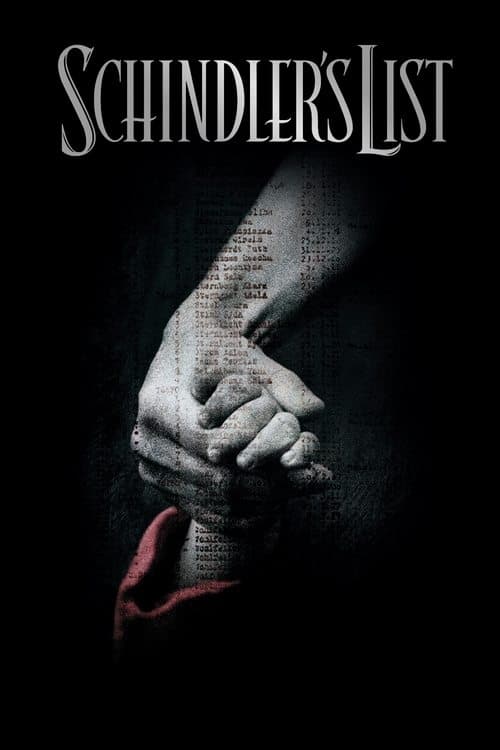
A German industrialist uses Jewish slave labor to run his factory during the Holocaust, then risks everything to save as many lives as possible. Shot in near-total black and white, the film is cinema's most sustained act of bearing witness to atrocity.
Schindler's List
Steven Spielberg · 1993