Horror · Mystery · Thriller

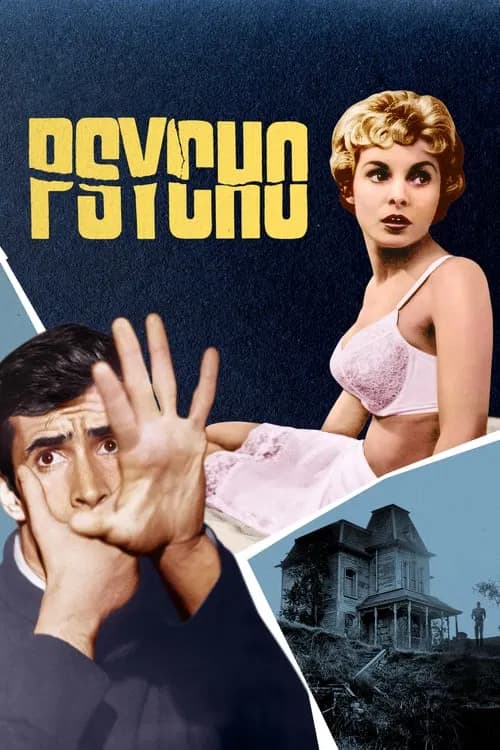
Psycho

Alfred Hitchcock, 1960

A secretary steals money from her employer and checks into a remote motel, where she is murdered by the owner's disturbed second personality. The story then switches to follow the people searching for her. Psycho killed its main character halfway through and is considered one of the earliest slasher films. After it, audiences could never again assume a character was safe.

Psycho (1960) poster

At a glance

Psycho is a 1960 horror, mystery and thriller film directed by Alfred Hitchcock. This breakdown covers 4 techniques (1 narrative, 2 cinematography and 1 sound), each with the scene where you can see it. If you like how it is made, Chinatown uses several of the same techniques.

Narrative

Expectation Collapse

Building up the usual genre expectations, like the villain getting caught and the climax approaching, then refusing to deliver them. Your own anticipation is what makes the letdown hit so hard.

How this film uses it

Marion Crane is introduced as the main character of what looks like a crime film about stolen money. Her murder 47 minutes in is designed to shock, and it does. It breaks the most basic promise a story makes to its audience, which is that the main character survives.

Where to see it

The shower. The story you thought you were watching ends here and a different film begins.
Cinematography

Off-Screen Atrocity

Keeping the worst violence outside the frame. You hear it or see its effects and other people's reactions, and your imagination does the rest.

How this film uses it

Editor George Tomasini and Hitchcock built the shower scene out of 78 camera setups and 52 cuts. You never actually see the knife go into flesh. All the violence comes from the editing, so the rapid cutting is the attack. As a matter of fact, this sequence proved that editing alone could make you feel physical horror.

Where to see it

The shower sequence. You get 78 setups and 52 cuts, and the knife is never shown touching her.

Cinematography

Voyeuristic Implication

Placing the camera like a hidden watcher, looking through peepholes, around corners and from concealed spots. You become part of the spying, which makes watching feel morally uneasy.

How this film uses it

The peephole shot is where the film says most clearly what it is about. You look through the hole at Marion undressing, and for a moment, you are Norman Bates. Hitchcock is saying that watching a film is itself a kind of peeping. You have been looking through Norman's eye since the first frame.

Where to see it

Norman at the peephole. The camera that has been watching Marion now shares Norman's view.

Sound

Bernard Herrmann String Attack

Scoring a moment of terror with string instruments played harshly, loudly and out of harmony. The shrieking, stabbing sound matches the physical violence on screen.

How this film uses it

Herrmann wrote the 'Psycho' cue (the 'eee-eee-eee' sound) for strings only, even though Hitchcock had asked for a jazz score. It was recorded to sound as aggressive as possible. It is a piece of music, and it also hits your nerves like a physical attack. It is still the most recognizable horror cue in cinema.

Where to see it

The shower sequence. The strings come in with the first movement of the knife.

Questions

Psycho: quick answers

What filmmaking techniques does Psycho use?
CineCode breaks down 4 techniques in Psycho (1960): Expectation Collapse, Off-Screen Atrocity, Voyeuristic Implication and Bernard Herrmann String Attack.
Who directed Psycho?
Alfred Hitchcock directed Psycho, released in 1960. CineCode also covers The 39 Steps (1935), The Lady Vanishes (1938), Rebecca (1940), Suspicion (1941), Saboteur (1942), Shadow of a Doubt (1943).
What films are similar to Psycho?
Films that share techniques with Psycho include Chinatown (1974), Se7en (1995), Life is Beautiful (1997), Witness for the Prosecution (1957).