History · War

They Shall Not Grow Old

Peter Jackson, 2018

Peter Jackson turns 100 hours of First World War footage from the Imperial War Museum into one shared story of British soldiers on the Western Front. Veterans' own recorded voices tell it, and the old film is restored, colorized and given sound. Worth watching as a filmmaker for how restoration changes the way you meet the past.

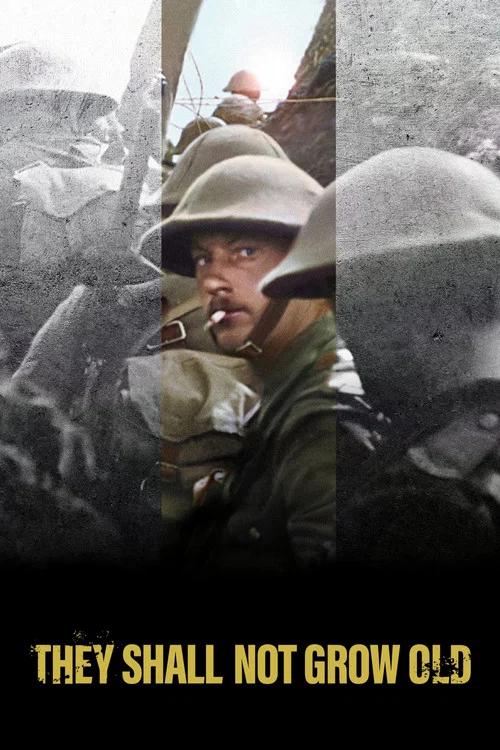
They Shall Not Grow Old (2018) poster

At a glance

They Shall Not Grow Old is a 2018 history and war film directed by Peter Jackson. This breakdown covers 4 techniques (1 narrative, 2 editing and 1 sound), each with the scene where you can see it. If you like how it is made, Milk uses several of the same techniques.

Narrative

Retrospective Voiceover

Having a narrator tell the story from some point after it happened. The events feel like memory, and you sense early on that something will be lost.

How this film uses it

There is no usual narrator. The voiceover is cut together from old BBC and Imperial War Museum interviews with British veterans, drawing on audio from 120 of the 200 men who were recorded. Their voices are older than the faces you see, so every story is told from a distance of decades.

Where to see it

Training and trenches: Veterans describe enlisting and going to war over footage of young soldiers.

Editing

Documentary Footage Integration

Cutting real documentary or archive footage into a fictional story, such as authentic records of wartime atrocities. It grounds the fiction in history and blurs the line between cinema and the record.

How this film uses it

The film was colorized and restored, and the crew re-timed it from 13 to 24 frames per second. The men stop looking like figures from a stiff photograph. Some archivists objected, which is part of the debate about the method.

Where to see it

Soldiers walk toward the camera: Restored color footage shows men grinning and posing for the lens.

Editing

Image Format Shift

Changing the look of the picture mid-film, such as its aspect ratio, color or film texture. The shift marks a change in time, mood or reality.

How this film uses it

The film starts in a boxy black and white frame like old newsreels. When the men reach the front, the picture opens into a wider color frame. Reviews describe the jump as a shock that puts you in the trenches with them.

Where to see it

Arrival at the front: The boxy black and white picture opens up into a wide color image as the men head toward the trenches.

Sound

Diegetic Sound Design

Using sounds the characters themselves can hear, like footsteps, radios or traffic, to build tension or show how someone feels. The sound does more than make the scene realistic.

How this film uses it

The original footage was silent. The film adds sound effects and voice acting, partly built from lip reading and oral history archives. Historians have questioned how well lip reading can capture accents. The sound makes the men seem to speak to you, which also means you should remember that part is a reconstruction.

Where to see it

Trench life: Silent footage of soldiers at the front is given sound effects and voices, so the men seem to talk and laugh.

Questions

They Shall Not Grow Old: quick answers

What filmmaking techniques does They Shall Not Grow Old use?
CineCode breaks down 4 techniques in They Shall Not Grow Old (2018): Retrospective Voiceover, Documentary Footage Integration, Image Format Shift and Diegetic Sound Design.
Who directed They Shall Not Grow Old?
Peter Jackson directed They Shall Not Grow Old, released in 2018. CineCode also covers Bad Taste (1987), Braindead (1992), Heavenly Creatures (1994), The Frighteners (1996), The Lord of the Rings: The Fellowship of the Ring (2001), The Lord of the Rings: The Two Towers (2002).
What films are similar to They Shall Not Grow Old?
Films that share techniques with They Shall Not Grow Old include Milk (2008), Parasite (2019), The Shining (1980), Her (2013).