Action · Drama

G.I. Jane

Ridley Scott, 1997

A Navy intelligence officer becomes the first woman to attempt the brutal training for a special reconnaissance unit. The senator who picked her for the test has a secret plan of her own. Watch how the film uses her body, and a shaved head, to show how far she has come.

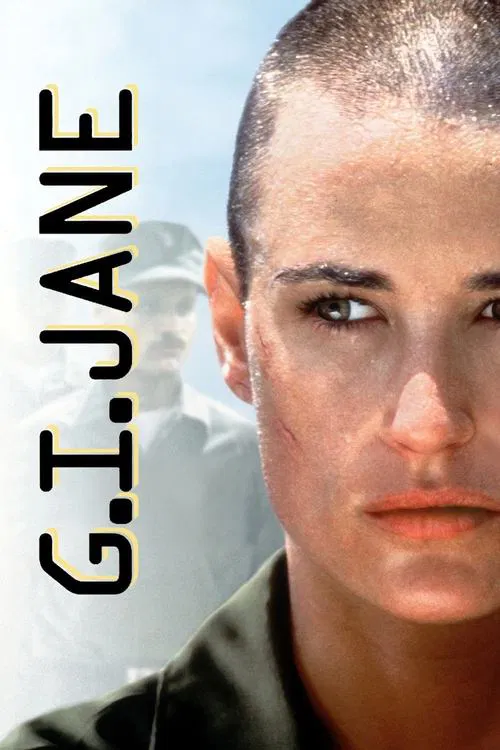
G.I. Jane (1997) poster

At a glance

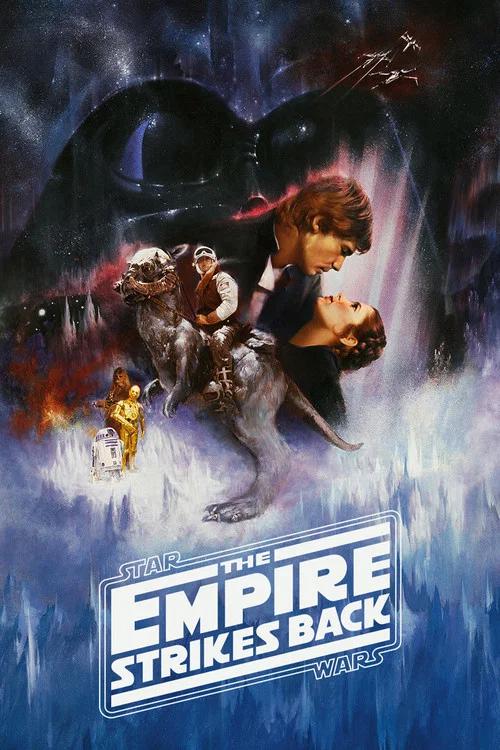
G.I. Jane is a 1997 action and drama film directed by Ridley Scott. This breakdown covers 5 techniques (3 narrative, 1 editing and 1 psychology), each with the scene where you can see it. If you like how it is made, Star Wars: The Empire Strikes Back uses several of the same techniques.

Narrative

Physical Transformation as Arc

Showing a character's inner change through their body: weight, posture, movement, injury or recovery. The body becomes a visible record of what happened to them and what it cost.

How this film uses it

Jordan O'Neil's change is something you can see. She goes through 20-hour days of obstacle courses, hauling landing rafts and pushing heavy ship fenders up sand dunes. She also shaves her head. By the end she helps pull the injured Master Chief out of an explosives-filled kill zone.

Where to see it

Hell week: the third week of selection is the hardest, and most of the candidates who quit do it before the fourth week.

Editing

Mentor Training Montage

Squeezing a long period of training under a teacher into a short sequence of quick clips. You watch failed attempts turn into small wins, which makes the student's growth believable.

How this film uses it

Weeks of training under Master Chief Urgayle are squeezed into quick scenes of drills: obstacle courses, dunes, rafts. You watch her struggle, then slowly keep up. The film uses these short bursts to show her earning her place without making you sit through every day of it.

Where to see it

The obstacle course: O'Neil is offered a 30-second allowance for being a woman. She refuses it and asks to be held to the same standard as the men.

Narrative

The Mentor-Monster Dynamic

Making the character who threatens the hero most also the one who helps them most. You can't separate the danger from the guidance.

How this film uses it

Urgayle is the biggest threat to O'Neil's place in the program and also the person who makes her strong. During survival training, he ties her to a chair and dunks her head in cold water in front of the other trainees. She fights back, and he starts to respect her. In the last mission she helps save him, and he gives her his Navy Cross and a book of poems.

Where to see it

The survival training interrogation: Urgayle ties O'Neil to a chair, slams her through a door and holds her head in ice-cold water. She hits back, and the trainees take notice.

Narrative

Institutional Honor Critique

Building the story around an institution's code of honor, often a military one, and showing the gap between what it claims and what it does. The code ends up protecting power.

How this film uses it

The Navy says it wants to see whether women can serve. Behind the scenes, Senator DeHaven picked O'Neil because she looked more feminine than the other candidates, and DeHaven never intended her to succeed. She used O'Neil as a bargaining chip to stop military base closings in Texas. The photos used to smear O'Neil came from her own office.

Where to see it

The smear campaign: O'Neil is accused of being a lesbian and chooses to ring out. She then learns the photos came from DeHaven's office and threatens to expose her.

Psychology

Identity Construction and Loss

Showing a character's sense of self being built, borrowed or stripped away by pressure, roles or the group. Who they are shifts with what they wear, say or join.

How this film uses it

O'Neil shaves her own head during training. The scene reads as a choice. She gives up the look that set her apart as a woman in a male unit and takes on the same look as her teammates. One way to read it is that this is the moment she stops asking to be treated as an exception.

Where to see it

The head shave: partway through training, O'Neil shaves her head herself.

Questions

G.I. Jane: quick answers

What filmmaking techniques does G.I. Jane use?
CineCode breaks down 5 techniques in G.I. Jane (1997): Physical Transformation as Arc, Mentor Training Montage, The Mentor-Monster Dynamic, Institutional Honor Critique and Identity Construction and Loss.
Who directed G.I. Jane?
Ridley Scott directed G.I. Jane, released in 1997. CineCode also covers The Duellists (1977), Alien (1979), Blade Runner (1982), Legend (1985), Black Rain (1989), Thelma & Louise (1991).
What films are similar to G.I. Jane?
Films that share techniques with G.I. Jane include Star Wars: The Empire Strikes Back (1980), The Silence of the Lambs (1991), Harakiri (1962), Joker (2019).