Drama · Biography · History

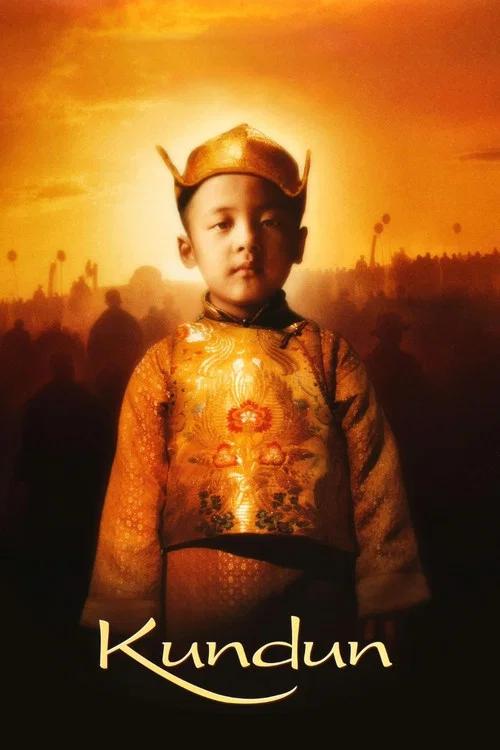
Kundun

Martin Scorsese, 1997

The life of the 14th Dalai Lama, from his discovery as a 2-year-old boy in 1937 to his escape from Tibet in 1959 after the Chinese invasion. Scorsese shot it in Morocco, and it is worth watching for how it builds Tibet out of paintings, sets and sound.

Kundun (1997) poster

At a glance

Kundun is a 1997 drama, biography and history film directed by Martin Scorsese. This breakdown covers 5 techniques (2 cinematography, 2 narrative and 1 sound), each with the scene where you can see it. If you like how it is made, Eternal Sunshine of the Spotless Mind uses several of the same techniques.

Cinematography

Historical Compositing

Digitally placing a fictional character into real archive footage, or blending actors with rebuilt period sets and backgrounds. It looks as if the character was really there in history.

How this film uses it

The production used 40 matte paintings, a lot compared with the 2 in Casino. Dante Ferretti's sets and the paintings fill in a Tibet that could not be filmed on location. Mixed together, the real and built parts look like one world.

Where to see it

The Potala Palace: the young Dalai Lama moves with his family into the huge palace in Lhasa.
Cinematography

Subjective Camera

Placing the camera where a character's eyes are, or shooting the scene the way that character experiences it. You see and feel things from inside their head.

How this film uses it

Reviewers note that Roger Deakins often puts the camera at the Dalai Lama's point of view. You see the palace, the ceremonies and the invaders as he does. It makes his life feel like an experience, not a lesson.

Where to see it

The escape from Lhasa: he flees in disguise at night and falls ill on the way to the Indian border.

Narrative

Ceremonial Pacing

Moving the film at the slow, deliberate pace of a ritual, with long takes, few cuts and unhurried camera moves. The patience builds dread and gives each step the weight of a ceremony.

How this film uses it

The film moves at a slow, formal pace that suits its rituals. It starts with a boy tested on his past life's belongings. Patience becomes part of the style.

Where to see it

The recognition test: the 2-year-old chooses the previous Dalai Lama's belongings from among others.

Sound

Minimalist Score

Scoring with repeating, slowly shifting patterns that build a calm, trance-like mood. The music feels like part of a ritual.

How this film uses it

Philip Glass wrote the score. Its steady patterns give the film a meditative feel that matches the monastery scenes. The film also has a track named after a sand mandala.

Where to see it

The opening credits: a sand mandala is the first image, over music.

Narrative

Ideological Villain

Writing a villain whose danger comes from a belief system that makes sense on its own terms. The story has to take on their ideas, and beating them physically isn't enough.

How this film uses it

Mao is polite in public and says in private that religion is poison. The danger is that he believes it. Tibet's faith meets an equally firm belief, and the Dalai Lama cannot answer it with force.

Where to see it

The meeting in Beijing: Mao Zedong publicly sympathizes with the Dalai Lama and privately calls religion poison.

Questions

Kundun: quick answers

What filmmaking techniques does Kundun use?
CineCode breaks down 5 techniques in Kundun (1997): Historical Compositing, Subjective Camera, Ceremonial Pacing, Minimalist Score and Ideological Villain.
Who directed Kundun?
Martin Scorsese directed Kundun, released in 1997. CineCode also covers Mean Streets (1973), Alice Doesn't Live Here Anymore (1974), Taxi Driver (1976), New York, New York (1977), Raging Bull (1980), The King of Comedy (1982).
What films are similar to Kundun?
Films that share techniques with Kundun include Eternal Sunshine of the Spotless Mind (2004), The Dark Knight (2008), Forrest Gump (1994), Harakiri (1962).