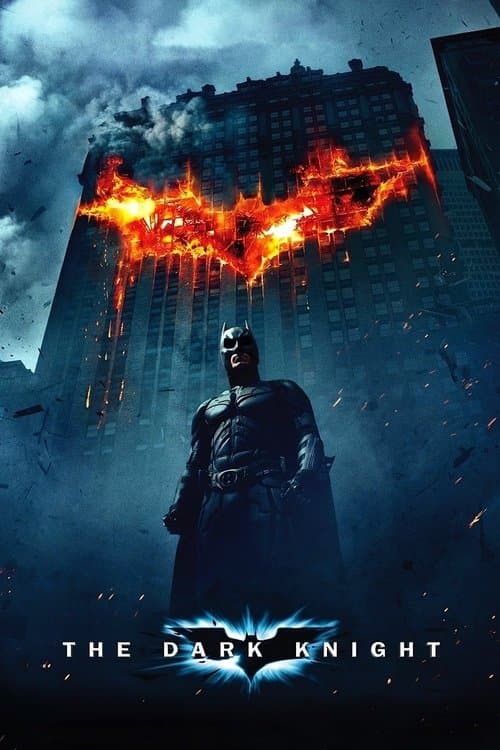
The Dark Knight
Christopher Nolan · 2008
Batman faces the Joker, a chaos agent who makes no demands and cannot be bargained with, while Harvey Dent's crusade against organized crime ends in catastrophic personal failure. A superhero film that functions as a post-9/11 interrogation of the cost of moral compromise.
Techniques Used
5 techniques identified in this film
IMAX Cinematography
CinematographyShooting on large-format 70mm IMAX film to achieve unparalleled resolution, image depth, and aspect ratio — expanding the frame itself as a tool of spectacle and immersion.
How this film uses it
Wally Pfister shot six major sequences on IMAX cameras, with the frame physically expanding from 2.39:1 to 1.43:1 during those scenes. The Joker's opening bank heist and the Hong Kong extraction immediately establish a visual scale that dwarfs conventional filmmaking.
Ideological Villain
NarrativeAn antagonist whose threat is not physical but philosophical — whose actions are driven by a coherent worldview that the narrative must actually engage with rather than simply defeat.
How this film uses it
The Joker has no origin story, no demands, and no plan that can be uncovered and stopped. His only goal is to prove that civilization's moral order is a thin fiction. The film takes his argument seriously enough that it cannot simply be dismissed — only endured.
Escalating Moral Stakes
NarrativeStructuring a narrative so that each act raises not just the physical danger but the ethical cost of winning, forcing the protagonist to make increasingly compromised choices.
How this film uses it
Nolan moves Batman from physical combat to surveillance state tactics to taking responsibility for Harvey Dent's crimes — each escalation requiring a greater moral sacrifice. The film ends with Batman having won by becoming what he feared.
Practical Destruction
CinematographyAchieving large-scale destruction sequences through real physical means — building and detonating actual structures — rather than digital simulation, grounding spectacle in material reality.
How this film uses it
Nolan built and actually detonated the hospital sequence and flipped a real tractor-trailer on a Chicago street. The weight and physics of real destruction give the film's action sequences an irreducible material presence that CGI cannot replicate.
The Prisoner's Dilemma
PsychologyStaging a scenario derived from game theory — in which two parties must choose cooperation or betrayal without communication — as a literal dramatic set piece that tests the film's moral arguments.
How this film uses it
The Joker places explosives on two ferries and gives each group the detonator for the other's boat. The scene is a live experiment in his thesis that people will choose self-preservation over mercy — and the film uses the outcome as a direct rebuttal.
You Might Also Like
Films that share at least one technique with The Dark Knight
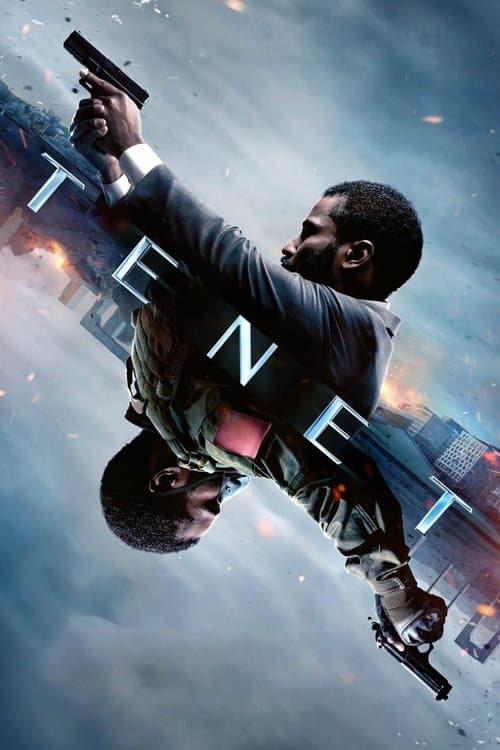
A CIA operative known only as the Protagonist discovers a technique for reversing the entropy of objects — and must prevent a future arms dealer from using it to run time backward and annihilate the present. Christopher Nolan's film is a James Bond plot run through a physics thought experiment.
Tenet
Christopher Nolan · 2020
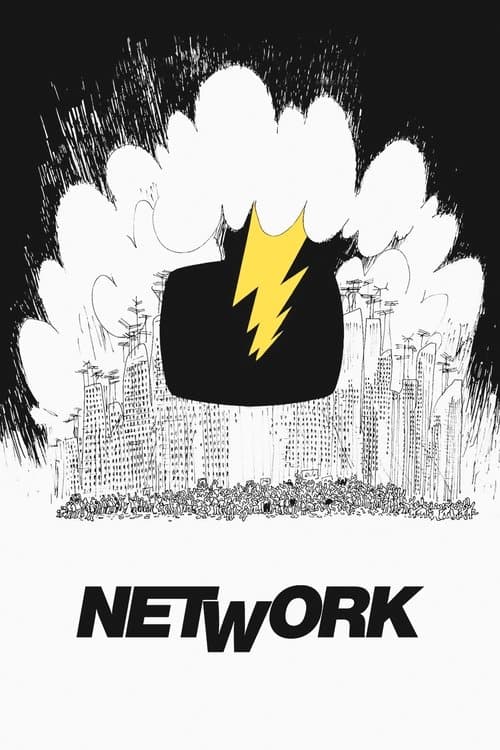
A television news anchor has a breakdown on air, announces he will kill himself on next week's broadcast, and becomes a ratings sensation. The network's executives debate whether to protect him or exploit him — and the answer is not difficult. A satire so accurate that it reads as prophecy.
Network
Sidney Lumet · 1976
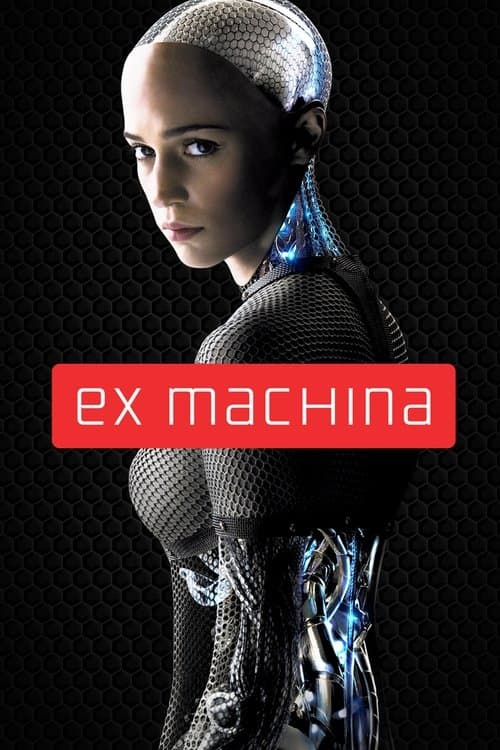
A programmer is invited to his company's CEO's remote estate to administer a Turing test on an AI with a humanoid body — and finds that the real test may not be the one he was told about. A film about consciousness, manipulation, and the Turing test's most dangerous implication.
Ex Machina
Alex Garland · 2014