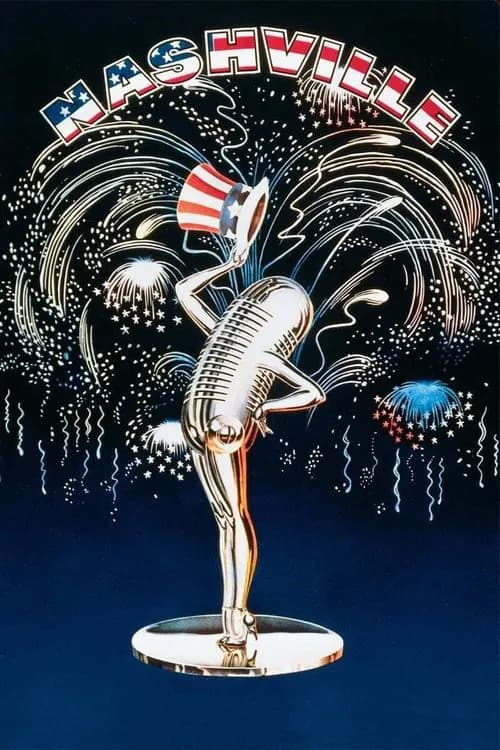
24 characters come together in Nashville, Tennessee over 5 days while a presidential campaign uses the country music industry as a backdrop. It all builds to a political rally. The violence there exposes the American myth that country music has been asked to keep alive. Altman's film is a portrait of a culture eating its own dream.
Nashville is a 1975 drama, comedy and music film directed by Robert Altman. This breakdown covers 4 techniques (2 narrative, 1 sound and 1 editing), each with the scene where you can see it. If you like how it is made, Magnolia uses several of the same techniques.
Introducing a large cast only through what they say and do in the present. There are no flashbacks or explained histories, yet each character feels distinct.
How this film uses it
Altman introduces 24 characters and explains nothing about any of them. You only know each one by what they do right now, so you piece together their histories from how they behave. It forces you to watch the surface closely and find the depth there.
Where to see it
The airport arrival sequence. Several characters get introduced at the same time. You can read each one right away from gesture and costume, without a single line of explanatory dialogue.
Using sounds the characters themselves can hear, like footsteps, radios or traffic, to build tension or show how someone feels. The sound does more than make the scene realistic.
How this film uses it
Altman recorded all the country music performances live. The songs were written for the film and performed by the actors. That makes the soundtrack a character in its own right, and the lyrics tell parts of the story the dialogue can't.
Where to see it
Barbara Jean's breakdown during her performance. The live recording catches the moment when the act and the real person collapse into each other. The music is diegetic, meaning it is played inside the scene, and here it works like a medical test.
Returning to a woven cord, thread or rope as a symbol of connection and fate. The repeated image links separate storylines and shows how the characters' lives are woven together.
How this film uses it
The presidential campaign's slogans and the Hal Phillip Walker rally run through every storyline as a repeating thread. Politics and music are pretty much always there in the background. By the end, country music and the campaign turn out to be the same project of building a national myth.
Where to see it
The campaign van playing Hal Phillip Walker's speeches through a loudspeaker around town. The political voice runs through scenes that seem to be about something else entirely.
Structuring the story so a character's rise or cruelty is mirrored by its opposite. A parallel story shows a different outcome, or a powerful figure loses everything in ways that echo earlier wrongs.
How this film uses it
Altman builds the film as a celebration of music, celebrity and people taking part in democracy. Then he makes the rally the place where an assassination happens. The film has been enjoying the American myth, and suddenly that myth shows its violence.
Where to see it
Barbara Jean shot during the concert. The celebration turns into disaster in a moment. Then Albuquerque spontaneously sings 'It Don't Worry Me' and leads the crowd's response, so the national myth carries on undisturbed.
Questions
Nashville: quick answers
What filmmaking techniques does Nashville use?
CineCode breaks down 4 techniques in Nashville (1975): Ensemble Characterization Without Backstory, Diegetic Sound Design, Braided Thread Motif and Tragic Inversion Structure.
Who directed Nashville?
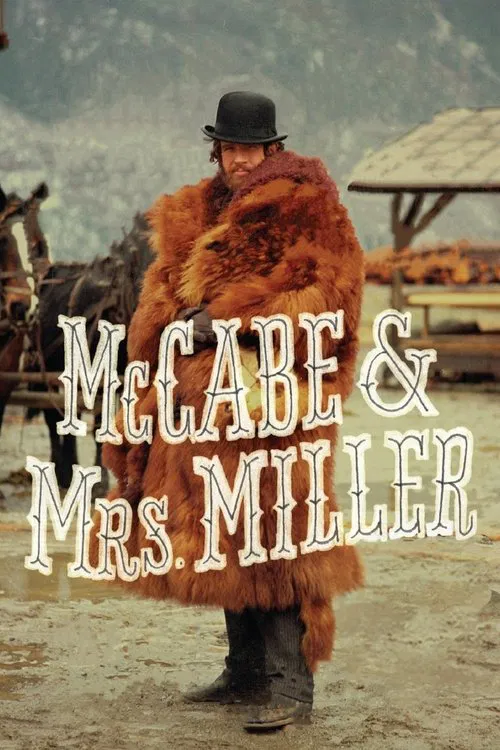
Robert Altman directed Nashville, released in 1975. CineCode also covers M*A*S*H (1970), McCabe & Mrs. Miller (1971), The Long Goodbye (1973), 3 Women (1977), Popeye (1980), The Player (1992).
What films are similar to Nashville?
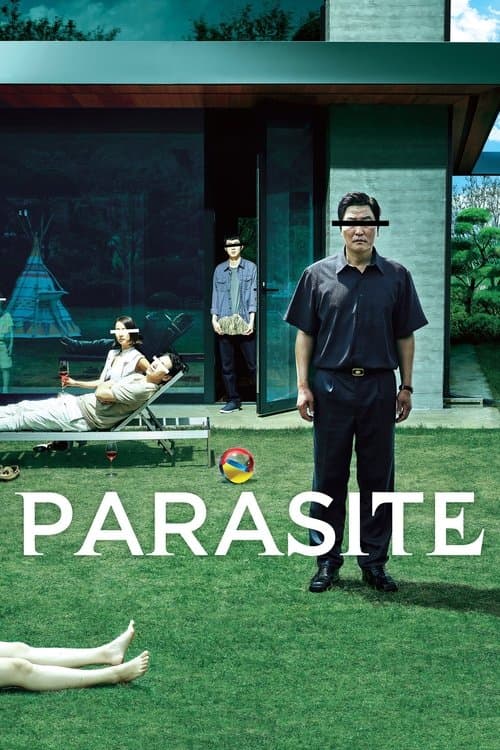
Films that share techniques with Nashville include Magnolia (1999), Emilia Pérez (2024), M*A*S*H (1970), Parasite (2019).