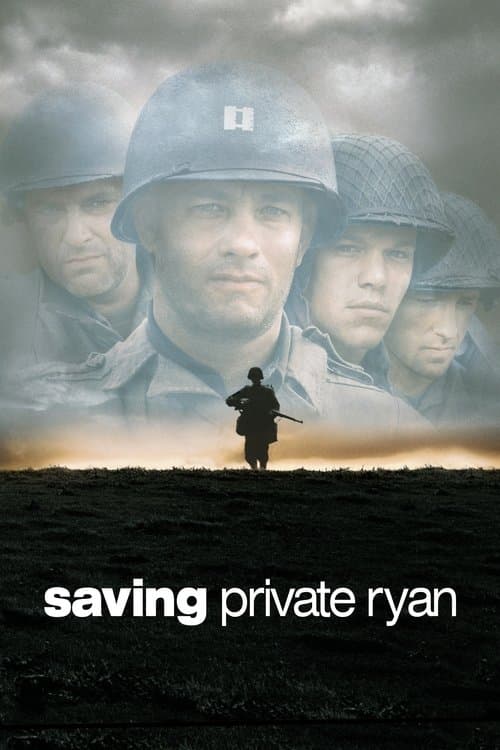
Saving Private Ryan
Steven Spielberg · 1998
A squad of soldiers is sent behind enemy lines after D-Day to retrieve the last surviving son of a family that has lost four boys in the war. The film's opening twenty-four minutes are the most viscerally honest depiction of combat ever committed to film.
Techniques Used
5 techniques identified in this film
Desaturated War Palette
CinematographyRemoving the saturation from a film's color to drain it of visual pleasure, insisting that the subject matter resists aestheticization and that the audience cannot take comfort in the image's beauty.
How this film uses it
Janusz Kamiński removed the protective coatings from the lenses and underexposed the film to achieve a bleached, newsreel-like palette. The images are not beautiful. Spielberg and Kamiński made a deliberate choice that war should not look good.
Shutter Angle Manipulation
CinematographyVarying the camera's shutter speed to change the quality of motion — a faster shutter produces staccato, strobing movement that reads as hyper-real and chaotic, contrasting with the smooth motion of conventional cinematography.
How this film uses it
Kamiński used a 45- and sometimes 90-degree shutter angle (standard is 180 degrees) for the D-Day sequence, producing the sharp, stuttering motion associated with World War II combat footage. The camera appears to be struggling to keep up with events rather than composing them.
Immersive Combat Sound Design
SoundDesigning a film's combat audio to prioritize the acoustic experience of the combatant over the spectator — directional, chaotic, physically present sound that does not organize itself for the audience's comfort.
How this film uses it
Sound designer Gary Rydstrom recorded actual weapons and designed the audio to feel directionally accurate and physically present. Bullets come from specific places. Explosions muffle hearing. The sequence has multiple moments of near-silence as characters experience concussive shock — using the audience's hearing as a storytelling instrument.
Bookend Moral Frame
NarrativeUsing a framing device at the opening and close of a film — typically an older character returned to a significant location — to ask a moral question about the events the audience has just witnessed.
How this film uses it
The film opens and closes with an elderly man at a war cemetery in Normandy. The question his presence poses — 'Have I earned this?' — is the film's real subject. The D-Day carnage and the mission that follows are the evidence the audience must weigh to answer it.
Anti-Epic Combat Staging
EditingRefusing the conventional grammar of war film spectacle — the heroic wide shot, the ordered advance, the clear narrative of victory — in favor of fragmented, ground-level, individual experience.
How this film uses it
The D-Day sequence has no heroic wide shots. There is no overview, no God's-eye perspective on the battle. The camera stays at ground level, behind obstacles, with individual men. Spielberg withholds the conventional war film's pleasures of spatial comprehension and moral clarity.
You Might Also Like
Films that share at least one technique with Saving Private Ryan
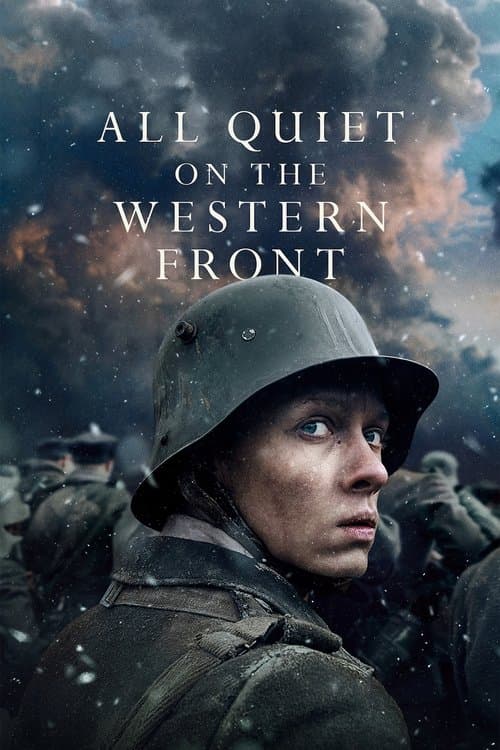
A young German soldier enlists enthusiastically for World War I and discovers the reality of the trenches — mud, terror, attrition, and death without meaning. Berger's version strips Remarque's novel of sentiment and replaces it with a sustained, physically overwhelming argument against the romance of war.
All Quiet on the Western Front
Edward Berger · 2022
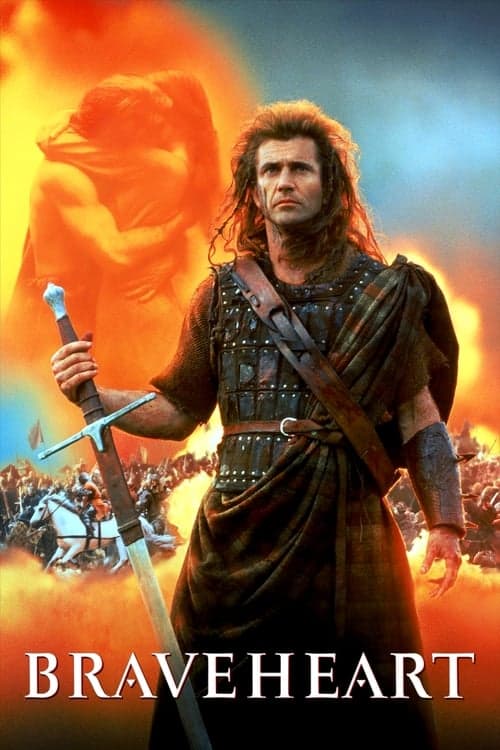
William Wallace leads a Scottish rebellion against English rule in the 13th century, transforming from farmer to warrior to martyr. A populist epic that made the battles of medieval Scotland feel viscerally, physically immediate.
Braveheart
Mel Gibson · 1995
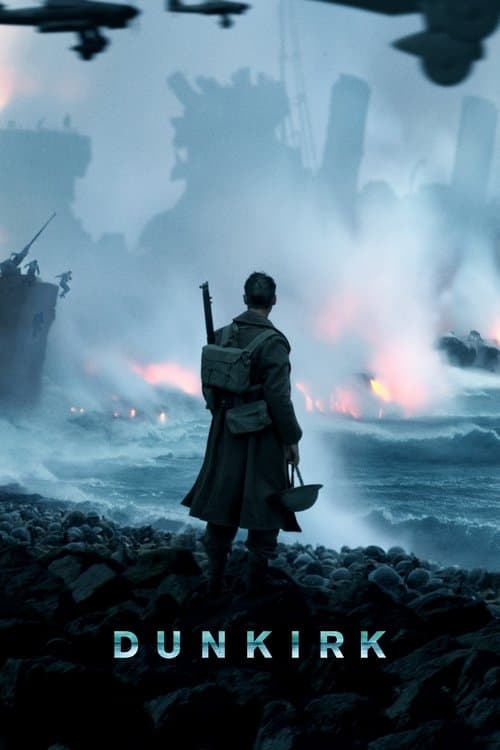
The Dunkirk evacuation of 1940 is told simultaneously from three perspectives — land (one week), sea (one day), and air (one hour) — in Christopher Nolan's experiential war film that strips away narrative to leave only sensation and survival. It is cinema as immersive endurance rather than as story.
Dunkirk
Christopher Nolan · 2017